Crisis Management: Signs It’s Time to Reach Out for Support
By the LSA Recovery editorial team
What Does a Crisis Really Look Like?
A crisis can feel different for everyone. For some, it is a moment of overwhelming fear or panic. For others, it is a slow build of worry, sleepless nights, or a sense that things are slipping out of control. If you are using substances more than you meant to, or if your mental health is making it hard to get through the day, you might be in a crisis. It is not a sign of weakness or a moral failing. It is simply a sign that you need extra support right now.
At LSA Recovery, we believe that reaching out for help during a crisis is an act of courage. Our Crisis Management services are here to provide immediate, non-judgmental support. We start with a Substance Use Assessment to understand your unique situation. From there, we connect you with the right care, whether that is Medication-Assisted Treatment, individual counseling, or Care Management to coordinate your recovery. You do not have to figure it out alone.
- You feel unsafe or are having thoughts of harming yourself or others.
- You are unable to take care of basic needs like eating, sleeping, or bathing.
- Your substance use has increased quickly or you are experiencing severe withdrawal symptoms.
- You have had a recent overdose or are worried you might have one.
- You feel completely overwhelmed, hopeless, or like you cannot cope.
- Family members or friends have expressed concern about your behavior or substance use.
- You are using substances to escape intense emotions or physical pain.
- You have stopped showing up for work, school, or important responsibilities.

Signs It's Time to Reach Out for Crisis Support
A crisis rarely comes without warning. It might be a night when you cannot stop using, a panic attack that leaves you breathless, or a morning when getting out of bed feels impossible. In the context of substance use and mental health, a crisis is simply a moment when your usual coping tools are not enough, and you need extra support to stay safe and steady. It is not a moral failing, a sign of weakness, or something to be ashamed of. It is a signal that your body and mind are overwhelmed, and that reaching out for help is the strongest, most caring thing you can do for yourself.
If you are wondering whether your situation 'counts' as a crisis, trust that feeling. You do not need to hit rock bottom to ask for help. Some common signs that it is time to reach out for professional support include:
At LSA Recovery, our Crisis Management team is here to meet you exactly where you are, without judgment. When you call, we start with a Substance Use Assessment to understand your unique situation, then work with you to stabilize the immediate moment. That might mean connecting you to Medication-Assisted Treatment, helping you manage withdrawal symptoms, or simply sitting with you until the panic passes. We also offer Same-Day Appointment options because we know that waiting even a day can feel impossible during a crisis. From there, our Care Management team helps you build a bridge to longer-term recovery, whether that means individual counseling, family support, or vocational rehab. If you are a family member or caregiver worried about a loved one, you are not alone either. We can help you recognize the signs and approach the conversation with compassion, not confrontation. Reaching out is a sign of strength, and it is the first step toward a calmer, more hopeful tomorrow.
- You are having thoughts of harming yourself or someone else, or you feel so hopeless that you do not see a way forward.
- You are using more of a substance than you intended, more often, or in ways that feel risky or out of control.
- You are experiencing severe withdrawal symptoms like shaking, sweating, nausea, confusion, or a racing heart, and you are afraid to stop on your own.
- You cannot take care of basic needs like eating, sleeping, bathing, or keeping yourself safe.
- You are missing work, school, or important family events because of your substance use or mental health, and it is getting worse.
- You have recently overdosed, or you have been told by someone you trust that they are worried about your safety.
- You feel like you are constantly in survival mode, and you cannot remember the last time you felt calm or hopeful.
What Crisis Management at LSA Recovery Looks Like
A crisis can feel like everything is happening at once. You might feel scared, overwhelmed, or unsure if what you are going through "counts" as a real emergency. At LSA Recovery, we believe a crisis is not a moral failing or a sign of weakness. It simply means that you need extra support at this moment. Our Crisis Management is built around meeting you where you are, without judgment, and helping you find steady ground.
When you reach out to us, we start with a Substance Use Assessment. This is a calm, honest conversation about what you are experiencing, not a test or a judgment. From there, our team works with you to stabilize. That might mean helping you through acute symptoms, connecting you with medical care, or exploring options like Medication-Assisted Treatment if that is right for you. We also have Care Management to help you coordinate next steps, so you do not have to figure everything out alone.
If you are a family member or caregiver watching someone you love struggle, you are not alone. We see how much courage it takes to reach out for help. We offer family support through programs like ACRA & CRAFT, which focus on building healthy communication and support systems. And because a crisis does not wait, you can schedule a Same-Day Appointment so you get the support you need without a long delay. You deserve compassion, and you deserve to feel safe.
How to Get Started: Same-Day Appointments and Assessments
If you or someone you care about is in the middle of a difficult moment, the idea of reaching out for help can feel overwhelming. You might worry about being judged, or you might not know exactly where to start. At LSA Recovery, we try to make that first step as gentle as possible. That is why we offer Same-Day Appointment slots, so you do not have to wait for days to talk to someone who can help. You can call or walk in, and our team will meet you where you are.
When you come in, our team begins with a Substance Use Assessment. This is not a test you can pass or fail. It is a conversation, a chance for us to understand your situation, your needs, and what kind of support might be most helpful. The assessment helps us see whether you need Crisis Management right now, or whether other services like Medication-Assisted Treatment or counseling would be a better fit. We work with you to create a plan that respects where you are, and we never rush you or make you feel small.
You are not alone in this. Many people worry that reaching out means they have failed, but the opposite is true. Asking for help is a sign of strength. Our care team is here to listen without shame, and to connect you to the right care, whether that is crisis support, ongoing therapy, or other resources. You can also reach out on behalf of a loved one. We are here for families too, and we can help you figure out how to have those hard conversations with compassion.
- Call us or visit our Brooklyn location to request a same-day appointment.
- Meet with our care team for a confidential, non-judgmental substance use assessment.
- Work together to decide on the next steps, which may include crisis management, counseling, or other support services.
- Leave with a clear, personalized plan and a warm connection to ongoing care.
Support for Family Members and Caregivers
When someone you love is going through a hard time with substance use or mental health, it can be hard to know what to do. You might feel scared, exhausted, or unsure whether the situation is serious enough to ask for help. The truth is, a crisis is not a sign of weakness or a moral failing. It is simply a moment when a person needs more support than they can provide on their own. At LSA Recovery, our Crisis Management team is here for the whole family, not just the person in distress.
As a family member or caregiver, you are often the first to notice that something has changed. Maybe your loved one has stopped going to work or school, is withdrawing from people they care about, or is using more often than before. Other signs might include severe withdrawal symptoms, talking about hopelessness or self-harm, or putting themselves in dangerous situations. If you are seeing any of these, it is okay to take them seriously. You do not need to wait until things get worse. Reaching out for a Substance Use Assessment can help you understand what is happening and what kind of support might help. If you are worried about immediate safety, the 988 Suicide & Crisis Lifeline is available for support, and SAMHSA offers guidance on mental health and substance use concerns.
When you contact us, our care team listens without judgment. Crisis Management at LSA Recovery starts with a Same-Day Appointment and a calm conversation about what is going on. From there, we work with you and your loved one to stabilize the situation and connect to ongoing care, whether that means Medication-Assisted Treatment, individual counseling, or family support. Programs like Individual, Family & Group Counseling and ACRA & CRAFT are designed to help families heal together, not just support the person in recovery. You do not have to carry this alone.
- Your loved one is using more often or in larger amounts than before, or has started using in risky situations.
- They are unable to take care of basic responsibilities like work, school, or personal safety.
- They are experiencing severe withdrawal symptoms, such as shaking, confusion, or intense physical discomfort.
- They talk about feeling hopeless, wanting to give up, or harming themselves.
- You are afraid for their safety or your own safety.
- They have overdosed before, or you are worried they might.
Building a Path Forward After a Crisis
A crisis can feel like a sudden storm, but it is not a sign of weakness or a moral failing. It is simply a moment when the weight of what you are carrying becomes too heavy to handle alone. Maybe you are using more than you want to, or you cannot seem to stop thinking about using. Maybe you are feeling hopeless, overwhelmed, or just not yourself. If you are wondering whether your situation counts as a crisis, the answer is often yes if it is interfering with your safety, your health, or your ability to get through the day. You do not have to wait until things get worse to reach out. Recognizing that you need extra support is a brave and important first step.
So what does a crisis actually look like? It can be different for everyone, but some common signs that it is time to seek professional help include:
If any of these sound familiar, please know that you are not alone and you are not broken. Crisis Management at LSA Recovery is built on warmth, not judgment. When you reach out, our care team starts with a Substance Use Assessment to understand what you are experiencing and what kind of support would help most. We offer Same-Day Appointment options so you do not have to wait to feel better. From there, we work with you to stabilize the immediate situation and then connect you to ongoing care, whether that is Medication-Assisted Treatment, Individual, Family & Group Counseling, or Care Management to help coordinate the next steps. The goal is not to label you or shame you, but to help you find solid ground again and build a path forward that feels manageable.
- You have thoughts of harming yourself or ending your life, or you are worried you might overdose.
- You are unable to meet basic responsibilities, like going to work, caring for family, or paying bills.
- You are experiencing severe withdrawal symptoms, such as shaking, sweating, nausea, or confusion.
- Your use of alcohol or other substances is escalating quickly, or you are using in risky situations.
- You feel out of control, like you cannot stop even when you want to, or you are using to cope with intense emotions.
- Family members or friends have expressed serious concern about your safety or well-being.
Frequently Asked Questions About Crisis Management
It is completely normal to have questions about what counts as a crisis and when to reach out. You might worry that your situation is not 'serious enough' or that asking for help means you have failed. Neither is true. A crisis is simply a moment when the weight of what you are carrying feels too heavy to handle alone, and that is exactly when support matters most.
Below are some of the questions we hear most often from people in Brooklyn and across NYC. If you do not see yours here, that is okay. Our team is always ready to listen. You can reach out to us anytime, and we offer Same-Day Appointment options so you do not have to wait to start feeling better.
- What counts as a crisis? A crisis can look different for everyone. It might be a moment when you feel unsafe, when you cannot get through your day, when withdrawal symptoms feel overwhelming, or when substance use is taking over your life. It is not about a specific label. If you are struggling to cope, that is enough to reach out. Our Substance Use Assessment can help you understand what you are experiencing and what kind of support might help.
- How do I know if a loved one is in crisis? You might notice changes in their behavior, mood, or daily routines. They may be withdrawing from people, neglecting responsibilities, or using substances more often. Trust your instincts. If you are worried, it is okay to reach out. Our Care Management team can guide you on how to start a conversation with compassion and connect your loved one to the right resources.
- What happens when I contact LSA Recovery for crisis support? When you call, you will speak with someone who listens without judgment. We will do an immediate assessment to understand your situation, help stabilize you, and then work with you to create a plan for ongoing care. This might include counseling, Medication-Assisted Treatment, or other services. The goal is to be a bridge to longer-term recovery, not a stopgap. You will never be shamed or turned away.
- Is crisis management only for severe situations? No. You do not need to hit rock bottom to ask for help. If you are feeling overwhelmed, unsure, or just need someone to talk to, that is enough. Reaching out early can prevent a situation from becoming more serious. Our team is here for you at any stage of your journey.
More Ways We Can Help
- MICA Program
- Our Philosophy
- About Us
- Contact Us
- Criminal Justice Counseling
- Vocational & Educational Rehabilitation
- Substance Abuse Education
- Health Education Groups
- HIV/AIDS Education
- DWI Program
- ACS (Family Support)
- Naloxone Training and Kits
When to Seek Care Right Away
- Symptoms that are severe, sudden, or rapidly getting worse
- Fever along with pain or other new symptoms
- Chest pain, difficulty breathing, or fainting
- Numbness, weakness, or loss of function in an arm or leg
- Any symptom severe enough to interrupt sleep, work, or daily activities for more than a few days
Sources
If you or someone you know is struggling with substance use, thinking about suicide, or in crisis right now, help is available. Call or text 988 to reach the 988 Suicide & Crisis Lifeline, or call the SAMHSA National Helpline at 1-800-662-4357 (1-800-662-HELP) for free, confidential, 24/7 treatment referral and information in English and Spanish. You can also search for local treatment options anytime at FindTreatment.gov. You are not alone, and reaching out is a sign of strength.
Disclaimer: This article is for general educational purposes only and is not a substitute for professional mental-health, medical, or crisis care. Always seek the advice of a qualified clinician or care provider with any questions you may have about a specific mental-health, behavioral, or substance-use concern. If you are in crisis, see the resources below.
ACRA & CRAFT: Signs It’s Time to See a Specialist
By the LSA Recovery editorial team
What Are ACRA and CRAFT? A Gentle Introduction
If you love someone struggling with substance use, you may feel lost, worried, or unsure how to help. You are not alone. Approaches like ACRA and CRAFT are designed for families like yours. They teach practical skills to encourage positive change, improve communication, and reduce household stress. These methods are not about blame or control. They build a supportive environment where everyone's dignity is respected, and the person using substances feels motivated to seek help on their own terms.
At LSA Recovery, our care team offers ACRA & CRAFT as part of a range of services that meet families where they are. These approaches work alongside supports like a Substance Use Assessment, individual, family & group counseling, and Care Management. The goal is not to force treatment but to create a bridge toward it. Many families worry their loved one will never agree to come to a program. ACRA and CRAFT are built for exactly that situation: they give you tools to make the idea of treatment feel less frightening and more possible.
You might wonder if this is your fault. It is not. Substance use disorder is a health condition, not a moral failing. The SAMHSA resource on families reminds us that family involvement can make a real difference in recovery. ACRA and CRAFT are grounded in this hope. They help you replace patterns like enabling or arguing with clearer, calmer ways of connecting. You will learn to reinforce positive behaviors, set healthy boundaries, and take care of your own well-being. This is not about giving up on someone; it is about finding a new way forward together.
- You have tried to help many times, but nothing seems to change.
- You find yourself making excuses or covering up their behavior.
- Communication has broken down, and every conversation turns into a fight.
- The whole household feels tense, anxious, or on edge because of substance use.
- You feel isolated, ashamed, or unsure where to turn for support.

Signs Your Family Might Benefit from a Specialist
If these signs feel familiar, you are not alone. Substance use disorder affects the whole family system. Our approach at LSA Recovery is rooted in compassion and practical support. Our care team can connect you with Individual, Family & Group Counseling, and if your loved one also deals with mental health challenges, our MICA Program offers integrated care. We also provide Care Management to coordinate services, so you do not have to navigate this alone.
You might think, "But my loved one won't come to treatment." That is exactly what CRAFT was designed for. It gives you tools to encourage change from the sidelines, without needing your loved one to take the first step. When they are ready, we can help them find their way, whether through Medication-Assisted Treatment or other services. The goal is not to control your loved one, but to create an environment where change feels possible and supported.
If you are ready to explore whether ACRA or CRAFT could help your family, you can reach out for a Same-Day Appointment or simply Contact Us. Seeking help is a sign of strength, not weakness. Your family deserves support, and it is available right here in Brooklyn.
- You have tried to help before, but nothing seems to stick. A structured program can offer a fresh approach.
- You find yourself enabling without meaning to, like giving money or making excuses. CRAFT can help shift those patterns.
- Communication has broken down into arguments or silence. Family counseling can help rebuild trust.
- The whole household is affected by the strain on finances, sleep, or emotional climate.
- You feel isolated and unsure what to do. A Substance Use Assessment can be a first step.
The Philosophy Behind Family-Based Support: No Blame, Just Skills
When a loved one struggles with substance use, it is natural to feel worry, frustration, or even guilt. Many family members wonder if they did something wrong. But substance use disorder is a health condition, not a moral failing. The philosophy behind programs like ACRA and CRAFT is simple: no blame, just skills. These approaches focus on what families can do together to support change.
ACRA (Adolescent Community Reinforcement Approach) and CRAFT (Community Reinforcement and Family Training) are built on positive reinforcement and clear communication. They teach families how to encourage healthy behaviors, talk about substance use without triggering defensiveness, and take care of their own well-being. This is not about controlling your loved one; it is about creating an environment where change feels possible. The Substance Abuse and Mental Health Services Administration (SAMHSA) recognizes that family involvement is key to recovery, which is why these programs put families at the center.
At LSA Recovery, our care team brings this philosophy to life. We believe family support is a powerful part of recovery, and we offer ACRA & CRAFT as part of our services. Our approach aligns with our overall philosophy of treating every person with dignity and respect. We also connect families with other resources like Substance Use Assessment and counseling, so you do not have to navigate this alone.
- No blame: Substance use is not anyone's fault.
- Skills over shame: Focus on learning new ways to communicate and cope.
- Positive reinforcement: Celebrate small steps toward change.
- Family involvement: Recovery is stronger when the whole family is on board.
- Self-care: Family members need support too.
What to Expect from ACRA and CRAFT at LSA Recovery
When you walk into LSA Recovery for ACRA and CRAFT, you are walking into a space where our care team works alongside you, building on the strengths you already have. ACRA and CRAFT are two family-focused programs that share a simple belief: the people who love someone struggling with substance use are not the problem, they are part of the solution. These programs teach practical skills for communication, positive reinforcement, and supporting change in a way that respects everyone's dignity. They are not about control or punishment.
Before starting, you and your family will meet us for a Substance Use Assessment, a gentle conversation that helps us understand your unique situation. From there, your work might connect with Individual, Family & Group Counseling, where you can practice new ways of talking and listening in a safe setting. If the person using substances also lives with a mental health condition, our MICA Program offers integrated support. And if you are navigating a court mandate or an agency like ACS, our Criminal Justice Counseling and ACS (Family Support) programs can help you meet those requirements while focusing on healing.
Many families come to us feeling exhausted, isolated, and unsure what to do next. They have tried reasoning, pleading, and setting boundaries, often with little success. If that sounds familiar, you are not alone. Research shows that family involvement can make a real difference in helping a loved one seek and stay with treatment. The SAMHSA Families resource highlights how family support is a key part of recovery. At LSA Recovery, we see it every day: when families learn new skills, the whole household starts to shift. You do not need to have all the answers. You just need to take the first step, and we will walk the rest of the path with you.
- You have tried to help many times, but nothing seems to change, and you are not sure what else to try.
- You find yourself making excuses for your loved one, covering up their behavior, or taking on their responsibilities.
- Communication has broken down into arguments, silence, or walking on eggshells.
- The substance use is affecting the whole household: siblings, partners, even extended family feel the strain.
- You feel isolated, ashamed, or convinced that this is somehow your fault.
- Your loved one refuses to consider treatment, and you are looking for a way to encourage them without pushing them away.
Addressing Common Hesitations: 'My Loved One Won't Come' and Other Worries
If you are worried that your loved one will refuse to come to treatment, you are not alone. Many families feel stuck at this exact moment. The good news is that programs like ACRA and CRAFT are designed for this situation. They do not require the person using substances to be present at the first session. Instead, you and other family members can start learning skills to support change. This approach is based on the idea that families can be powerful agents of healing. Our care team can help you get started with a Substance Use Assessment to understand your unique situation.
You might also worry about enabling your loved one or wonder if this is somehow your fault. Please hear this: substance use disorder is a health condition, not a moral failing. It is not caused by anything you did or did not do. What you can do is learn new ways to communicate and set boundaries that respect everyone's dignity. Research shows that family involvement improves outcomes. The SAMHSA website offers resources for families, and our care team can walk you through what to expect. We also offer Individual, Family & Group Counseling to help you build these skills together.
If you are ready to take the next step, you do not have to do it alone. You can reach out for a Same-Day Appointment to talk with someone who understands. Our care team is here to listen without judgment. Seeking help is a sign of strength, not weakness. Whether you are supporting a loved one or are in recovery yourself, we are here to help you build a healthier future together. Contact us today to learn more about how ACRA and CRAFT can support your family.
- You have tried to help many times, but nothing seems to change.
- Communication with your loved one often turns into arguments or silence.
- The substance use is affecting the whole household, including children or other family members.
- You feel isolated and unsure where to turn for support.
How to Get Started: Reaching Out for Support
If you are reading this because you are worried about someone you love, take a breath. You are not alone, and you are not failing. Reaching out for support is one of the most caring and courageous things a family member can do. Programs like ACRA and CRAFT are designed specifically for families like yours. They are not about blame or control. They are about learning new skills, improving communication, and finding ways to support change that respect everyone's dignity. At LSA Recovery, our care team walks alongside you, whether your loved one is ready to seek help or not.
So how do you know it is time to reach out? There is no single perfect moment, but there are some common signs that family-based support could make a real difference. If you notice any of these, it may be worth having a conversation with someone who understands.
When you reach out, you do not have to have all the answers. Our team starts with a warm, non-judgmental conversation. We can begin with a Substance Use Assessment to understand the full picture, and then connect you with the right services. Many families find that combining family support with Individual, Family & Group Counseling helps everyone heal together. Our Care Management team can also help coordinate appointments, resources, and communication with other providers. And if you are involved with ACS or the court system, our ACS (Family Support) program is here to help you meet those requirements without shame. You can even request a Same-Day Appointment to get started quickly. Seeking help is a sign of strength, not weakness. Your family is worth it, and so are you.
- You have tried talking, pleading, or setting boundaries, but nothing seems to change.
- You find yourself making excuses for your loved one or covering up for them.
- Arguments about substance use happen often, and communication feels broken.
- The whole household feels tense, anxious, or walking on eggshells.
- You feel isolated, unsure what to do, or ashamed to ask for help.
- Your loved one is not interested in treatment, and you do not know how to reach them.
- You have heard about harm reduction tools like naloxone and want to be prepared, but you are not sure how to talk about it.
Building a Supportive Future: Family, Recovery, and Community
When a loved one is struggling with substance use, the whole family feels it. You may have tried talking, pleading, or setting rules, only to see things stay the same. That is not a sign of failure. It is a sign that you might benefit from a different kind of help. Programs like ACRA and CRAFT are designed to bring family members into the recovery process in a way that feels supportive, not blaming. They focus on building positive communication, setting healthy boundaries, and encouraging change through rewards and connection rather than punishment. At LSA Recovery, these programs are led by our care team and are grounded in the belief that recovery happens best when people feel understood and supported. According to SAMHSA, involving family in recovery can strengthen the process and improve outcomes. You can learn more about our approach in Our Philosophy.
It might be time to talk with a specialist about ACRA or CRAFT if you notice some of these signs in your family:
- You have tried for months or years to help your loved one stop using, and nothing seems to make a lasting difference.
- You find yourself making excuses for their behavior, covering up consequences, or giving money you know will be used for substances.
- Arguments about substance use have become a regular part of home life, and it feels like no one is really listening.
- Your own health, sleep, or mood has suffered because of worry about your loved one.
- You feel isolated, ashamed, or unsure where to turn, and you are tired of handling this alone.
Frequently Asked Questions About ACRA and CRAFT
It is natural to have questions about ACRA and CRAFT. In plain terms, both are family-focused approaches that help the people who care about someone with substance use. ACRA (Adolescent Community Reinforcement Approach) works with a young person and their family. CRAFT (Community Reinforcement and Family Training) supports family members even when their loved one is not ready for treatment. Both are built on respect, communication, and positive change. Our ACRA & CRAFT program brings these approaches together in a warm, supportive setting.
One of the most common questions we hear is, "What if my loved one refuses to come?" CRAFT was designed for exactly that situation. It gives you practical skills to encourage change without lectures or conflict. Another question is, "Is this my fault?" The answer is no. Substance use disorder is a health condition, not a moral failing. Organizations like SAMHSA offer family resources that explain how families can support recovery in a healthy way. The NIAAA also provides information on alcohol use and family support.
- My loved one won't go to treatment. Can CRAFT still help? Yes. CRAFT teaches family members how to use positive reinforcement and clear communication to gently encourage change, even before the person is ready.
- What happens in ACRA? ACRA brings together the young person and a family member or caregiver to build communication skills, find enjoyable activities that do not involve substances, and create a more supportive home environment.
- How is ACRA or CRAFT different from regular counseling? These programs focus on the family as a whole, not just the individual. They are skills-based and use positive reinforcement rather than blame or confrontation.
- How do we get started? Reach out to our care team for a Substance Use Assessment. We can also help you schedule a Same-Day Appointment if you are ready to talk soon.
More Ways We Can Help
- About Us
- Crisis Management
- Vocational & Educational Rehabilitation
- Substance Abuse Education
- Health Education Groups
- HIV/AIDS Education
- DWI Program
- Naloxone Training and Kits
When to Seek Care Right Away
- Symptoms that are severe, sudden, or rapidly getting worse
- Fever along with pain or other new symptoms
- Chest pain, difficulty breathing, or fainting
- Numbness, weakness, or loss of function in an arm or leg
- Any symptom severe enough to interrupt sleep, work, or daily activities for more than a few days
Sources
If you or someone you know is struggling with substance use, thinking about suicide, or in crisis right now, help is available. Call or text 988 to reach the 988 Suicide & Crisis Lifeline, or call the SAMHSA National Helpline at 1-800-662-4357 (1-800-662-HELP) for free, confidential, 24/7 treatment referral and information in English and Spanish. You can also search for local treatment options anytime at FindTreatment.gov. You are not alone, and reaching out is a sign of strength.
Disclaimer: This article is for general educational purposes only and is not a substitute for professional mental-health, medical, or crisis care. Always seek the advice of a qualified clinician or care provider with any questions you may have about a specific mental-health, behavioral, or substance-use concern. If you are in crisis, see the resources below.
Does Insurance Cover Naloxone Training and Kits in Brooklyn? A Warm Guide to Getting Help
By the LSA Recovery editorial team
What Is Naloxone and Why Is It Important?
Naloxone is a safe, lifesaving medication that can reverse an opioid overdose. It works quickly, usually within minutes, by blocking the effects of opioids on the brain and restoring normal breathing. It is not a treatment for substance use disorder itself, but it is a powerful tool that gives a person a second chance to seek help. You may hear it called by the brand name Narcan, and it comes as a nasal spray or an injectable. The medication is easy to use, and you do not need any medical training to give it. At LSA Recovery, we offer Naloxone Training and Kits to anyone who wants to be prepared, whether for themselves, a loved one, or someone in their community.
Why is naloxone so important? Because opioid overdoses are a serious risk for anyone who uses opioids, including prescription pain relievers, heroin, or fentanyl. An overdose can happen to anyone, regardless of how long they have been using or how careful they try to be. Having naloxone nearby can mean the difference between life and death. It is not about encouraging use, it is about being ready to act if the worst happens. That is why we include naloxone training as part of our broader approach to safety, alongside our Crisis Management services and health education groups. The goal is always to keep people alive and connected to care.
In New York, most insurance plans cover naloxone fully. Our Care Management team can help you check your plan. If you do not have insurance, we have options through our Substance Use Assessment and health education groups. No one is turned away. You can also schedule a Same-Day Appointment to get started right away.
- Naloxone is a safe medication that reverses opioid overdoses and restores breathing.
- It is easy to use and does not require medical training.
- Insurance coverage for naloxone is common in New York, and many plans cover it fully.
- LSA Recovery's Care Management team can help you verify your insurance coverage.
- If you do not have insurance, we offer options through our Substance Use Assessment and health education groups.
- Getting naloxone and training is a sign of caring for yourself and others, not a sign of weakness.

How to Know If You or Someone You Love Could Benefit from Naloxone
Naloxone is a medication that can reverse an opioid overdose. It is safe to use and easy to carry. Many people wonder if they or someone they care about should have naloxone on hand. The answer is: anyone who might be near someone using opioids could benefit. This includes people who use substances themselves, their family members, friends, coworkers, or neighbors. It also includes people who work in settings where overdoses might happen, like shelters or community centers.
You do not need to be a medical professional to use naloxone. Training is simple and can be done in a group or one-on-one. At LSA Recovery, we offer Naloxone Training and Kits as part of our commitment to keeping our community safe. We also provide a Substance Use Assessment if you want to talk about your own or a loved one's substance use in a judgment-free space. Our Care Management team can help you figure out what steps make sense for your situation.
Getting naloxone is a sign of caring, not a sign that you expect something bad to happen. It is like having a fire extinguisher: you hope you never need it, but you are ready just in case. If you or someone you love uses opioids, or if you are not sure but want to be prepared, naloxone is a smart choice. Our team is here to help you access it, no matter your insurance or income. You can even schedule a Same-Day Appointment if you want to talk today.
- You or someone you spend time with uses prescription opioids or any other opioid (like heroin or fentanyl).
- You have a friend or family member in recovery from opioid use disorder. Overdose can happen even after a period of not using.
- You work or volunteer in a place where people might use opioids, such as a shelter, drop-in center, or recovery program.
- You want to be prepared to help in an emergency without waiting for first responders.
What Naloxone Training and Kits Actually Look Like at LSA Recovery
If you are thinking about getting naloxone training and a kit, you might feel a little unsure about what to expect. That is completely normal. At LSA Recovery, we keep everything simple, private, and free of judgment. You do not need to share your story or make any promises about your own substance use. You can come in for training by yourself, or with a friend or family member. Our staff will walk you through how to recognize the signs of an opioid overdose and how to use naloxone safely. The training itself is straightforward and usually takes less than an hour. We hold sessions in both group settings, as part of our Health Education Groups, and one-on-one if you prefer more privacy. The goal is not to pressure you into anything, but to make sure you have the tools and confidence to act quickly if someone near you overdoses.
Every person who completes the training receives a free naloxone kit to take home. The kit contains two doses of nasal spray and a simple instruction card. We do not record your name or ask for proof of insurance. This is part of our belief that no one should be turned away from life-saving help, which is at the heart of our philosophy. Getting trained and carrying naloxone is a way of showing care for your community, your family, and yourself. It does not mean you are encouraging use, it means you are ready to help someone stay alive long enough to reach treatment. For people involved with the criminal justice system or child welfare, naloxone training is often a recommended part of programs like Criminal Justice Counseling or ACS (Family Support). Our staff can also connect you to other forms of support, such as Crisis Management, Substance Abuse Education, Individual, Family & Group Counseling, or ACRA & CRAFT, if you want to talk more about your own situation. The most important thing is that you are here, and that is a step worth taking.
Getting Started: How to Access Naloxone Training and Kits in Brooklyn
Getting naloxone training and a kit is simple. You can start by contacting us for a Same-Day Appointment or by joining one of our Health Education Groups. Our Care Management team can help you check your insurance coverage, but even without insurance, we have options to ensure you can access naloxone at low or no cost. The first step is reaching out. You can also learn more about our approach on our About Us page. No matter your situation, we are here to help you get started without judgment. Contact us today via our Contact Us page to schedule an appointment or ask questions.
Does Insurance Cover Naloxone Training and Kits? What You Need to Know
The good news is that in New York, most insurance plans cover naloxone and the training to use it. This includes private insurance, Medicaid, and Medicare. State laws and federal recommendations have made it easier for people to get this lifesaving medication without a big bill. Naloxone, sometimes known by the brand name Narcan, can reverse an opioid overdose if given in time. It is safe, easy to use, and does not cause harm if given to someone who is not experiencing an overdose. The National Institute on Drug Abuse explains that naloxone is a critical tool for saving lives, and having it on hand can make a real difference for anyone who might be at risk of an overdose.
If you are not sure what your plan covers, you can check with your insurance company directly. You can also reach out to our care management team. We are here to help you understand your benefits and find out if naloxone training and kits are covered. If you need support quickly, we offer same-day appointments so you can get the information and resources you need without waiting. Our goal is to make this process as simple and stress-free as possible.
What if your insurance does not cover naloxone, or you do not have insurance at all? Do not worry. At LSA Recovery, our philosophy is that no one should be turned away because of cost. We can help you access naloxone and training through our substance use assessment and health education groups, often at low or no cost. Getting naloxone and learning how to use it is a sign of caring for yourself and your community. It does not encourage substance use. It saves lives. And it is part of a larger approach to safety that includes crisis management and other forms of support.
What If You Don’t Have Insurance or Need Help Paying?
If you don't have insurance or need help paying, don't worry. At LSA Recovery, no one is turned away because of cost. Through our Health Education Groups and Substance Use Assessment, we can help you access naloxone training and kits at low or no cost. We also offer a range of other services that may be available on a sliding scale, including Medication-Assisted Treatment, Individual, Family & Group Counseling, Vocational & Educational Rehabilitation, and our MICA Program for dual diagnosis support. For those involved with the legal system or child welfare, naloxone is often a recommended part of programs like Criminal Justice Counseling or ACS Family Support. Our DWI Program and MICA Program also emphasize safety and harm reduction. You can also visit FindSupport.gov to learn more about finding help in your area. No matter your situation, we are here to help without judgment.
Support for Family Members and Loved Ones
If you are a family member or loved one of someone who uses substances, you may wonder if you can get naloxone training and kits for yourself. The answer is yes, and insurance often covers it. Our Care Management team can help you check your plan. You can also learn more about naloxone through resources like NIDA's Naloxone DrugFacts and FindSupport.gov. Getting trained and having naloxone on hand is a powerful way to show you care. For families who want extra support, LSA's ACRA & CRAFT program is designed to help loved ones in a non-judgmental, compassionate way. We also offer Individual, Family & Group Counseling to support your whole family. You are not alone in this. Whether you are seeking training for yourself or for someone you care about, we are here to help you take that step.
Building a Safer Future: Naloxone as Part of Your Recovery Journey
Naloxone is a safe, life-saving medication that can reverse an opioid overdose. It is not a treatment for substance use disorder itself, but it is an important tool for keeping you and your loved ones safe while you work toward recovery. In New York, most insurance plans cover naloxone and training, and our Care Management team can help you check your coverage. If you don't have insurance, we have options through our Substance Use Assessment and Health Education Groups.
Naloxone training is straightforward and can be done in a group or one-on-one. You will learn how to recognize the signs of an overdose, how to administer naloxone, and what to do after. This training is a simple, empowering step that shows you care about yourself and your community. For people involved with the legal system or child services, naloxone is often a required or recommended part of programs like Criminal Justice Counseling or ACS Family Support. Our DWI Program and MICA Program also include safety planning. And if you are supporting a family member, our ACRA & CRAFT program can help. Recovery is a journey, and we offer many services to support you along the way, including Vocational & Educational Rehabilitation to help you rebuild your life, and HIV/AIDS Education as part of our health education offerings. According to the National Institute on Drug Abuse, naloxone has no potential for abuse and is safe to use even if opioids are not present. You can also visit FindSupport.gov to learn more.
Getting naloxone and training is a sign of strength. It is a tool that can save a life, including your own, while you take steps toward recovery. Whether you are just starting to explore treatment, are already in recovery, or are supporting someone else, we are here to help. Our team offers counseling, medication-assisted treatment, and many other services. If you have questions or want to get a naloxone kit, please reach out. Contact us today. We are glad you are here. Learn more about our mission on our About Us page.
- Most New York insurance plans cover naloxone kits and training, often with no copay.
- Our care management team can help you check your coverage and find options if you are uninsured.
- Naloxone training is available through our health education groups and individual sessions.
- For those involved with the legal system or child services, naloxone may be part of your program requirements.
- No one is turned away for inability to pay. Our substance use assessment can connect you to low-cost or free naloxone.
Frequently Asked Questions About Insurance and Naloxone in Brooklyn
Here are answers to common questions about insurance and naloxone in Brooklyn. If you have more questions, please reach out to us. You can also visit our Contact Us page or call us directly.
- Does my insurance cover naloxone? Most plans in New York cover naloxone, often at no cost. Check with your insurance or let our care management team help.
- What if I don't have insurance? We can help you access naloxone through our substance use assessment and health education groups at low or no cost.
- How long does naloxone training take? Training is straightforward and can be done in a group or individual setting. It usually takes less than an hour.
- Is naloxone only for people who use opioids? No. Anyone can carry naloxone. It is a safety tool for families, friends, and community members.
- Will getting naloxone encourage someone to use more? No. Naloxone saves lives and gives people a chance to seek treatment. It is a bridge to recovery, not a green light to use.
- Can I get naloxone through a court or ACS program? Yes. Many programs like criminal justice counseling and ACS family support include naloxone as a safety measure.
More Ways We Can Help
When to Seek Care Right Away
- Signs of an overdose: the person cannot be woken, breathing is slow or has stopped, or the lips and fingertips look blue or grey. Call 911 immediately and give naloxone if it is available.
- Thoughts of suicide or self-harm, or feeling unable to stay safe. Call or text 988 for the Suicide and Crisis Lifeline.
- Chest pain, a racing or irregular heartbeat, trouble breathing, or fainting.
- Withdrawal from alcohol or benzodiazepines with shaking, confusion, hallucinations, or a seizure. This can be life threatening and needs emergency care rather than stopping on your own.
- Repeated vomiting, being unable to keep fluids down, or a high fever during withdrawal.
Sources
If you or someone you know is struggling with substance use, thinking about suicide, or in crisis right now, help is available. Call or text 988 to reach the 988 Suicide & Crisis Lifeline, or call the SAMHSA National Helpline at 1-800-662-4357 (1-800-662-HELP) for free, confidential, 24/7 treatment referral and information in English and Spanish. You can also search for local treatment options anytime at FindTreatment.gov. You are not alone, and reaching out is a sign of strength.
Disclaimer: This article is for general educational purposes only and is not a substitute for professional mental-health, medical, or crisis care. Always seek the advice of a qualified clinician or care provider with any questions you may have about a specific mental-health, behavioral, or substance-use concern. If you are in crisis, see the resources below.
Does Insurance Cover MICA Programs in Brooklyn? A Guide to Paying for Dual Diagnosis Care
By the LSA Recovery editorial team
What Is a MICA Program? Understanding Dual Diagnosis Care
A MICA program, short for Mentally Ill Chemical Abuser, is treatment for people living with both a mental health condition and a substance use disorder. Many today call this dual diagnosis or co-occurring disorders. Treating these conditions together in one place is generally far more effective than treating them separately. SAMHSA notes that co-occurring disorders are common and that integrated care leads to the best outcomes. NIMH also emphasizes that mental health and substance use are closely linked and that addressing both is key to lasting recovery.
At LSA Recovery, our MICA Program combines mental health and substance use treatment in one supportive place. It starts with a Substance Use Assessment, where our care team listens to your story. From there, we create a plan that may include Medication-Assisted Treatment, Individual, Family & Group Counseling, and other services like Crisis Management or Criminal Justice Counseling if needed. Since insurance can feel confusing, our Care Management team helps you understand your benefits and handles the paperwork. Most plans, including Medicaid, Medicare, and private insurance, cover these services under mental health parity laws, and we accept a wide range of them.
The goal is not just to stop substance use, but to help you feel more stable, hopeful, and in control. You are not alone, and you are not to blame. Reaching out is a sign of strength. To learn more about our approach, read about Our Philosophy or visit our About Us page. When you are ready, our Contact Us page is always open.

Signs That You or a Loved One May Need Dual Diagnosis Support
Sometimes it is hard to tell whether you or a loved one is dealing with a mental health challenge, a substance use issue, or both. When the two go hand in hand, experts call it a co-occurring disorder, or dual diagnosis. Treating both together is far more effective than treating each separately, and that is exactly what a MICA Program does. At LSA Recovery, we see you as a whole person deserving compassionate care that addresses everything at once.
How do you know if you or someone you care about might need this support? One sign is feeling like your moods or emotions are hard to manage, especially if substance use seems like the only relief. You might notice lingering sadness, anxiety, irritability, or hopelessness, even when you stop using for a while. Another sign is that treatment for one issue keeps falling short. For example, someone might see a therapist for depression but continue using alcohol to cope, and the depression stays. Or someone might stop using for a period, only to have intense anxiety or trauma symptoms return, making it hard to stay on track.
Other signs include changes in sleep or appetite, trouble concentrating, withdrawing from family and friends, losing interest in things you used to enjoy, or thinking about harming yourself. If you are involved with the legal system, a dual diagnosis may be part of what is going on. Our Criminal Justice Counseling program is designed to help people in that situation get the right care. If you are a parent or caregiver working with ACS, our ACS (Family Support) services can guide the whole family toward help. Whatever the signs look like, remember you are not alone, and help is available.
- Your mental health symptoms get worse when you use substances, or you rely on substances to feel normal.
- You have tried to stop or cut back on your own, but emotional struggles keep pulling you back.
- A loved one has mentioned changes in your mood, energy, or behavior that concern them.
- You have a history of trauma, depression, anxiety, or other mental health conditions that feel tied to your substance use.
- You have been told you need a Substance Use Assessment to figure out what kind of support would help most.
- You are unsure where to start and want to talk to someone who will listen without judgment.
What Does Treatment Look Like in a MICA Program?
If you have been told you need a MICA program, you might wonder what it looks like day to day. In simple terms, it means you are dealing with two connected issues, substance use and mental health, and they need to be treated together. At LSA Recovery, our MICA Program is built on this idea: your mental health and your substance use are not separate problems, and healing happens when we look at the whole person, not just one diagnosis.
A typical week might start with a full Substance Use Assessment, where a clinician sits down with you to understand your history, current struggles, and goals. This is not a test you can fail; it is a conversation to help us recommend the right support. Your care may then include Individual, Family & Group Counseling, one-on-one sessions, group meetings with others who share similar experiences, or family sessions. If medication can help stabilize your mental health or reduce cravings, our team may explore Medication-Assisted Treatment alongside counseling. The goal is not to overwhelm you, but to build a schedule that feels manageable and supportive.
Because life does not pause while you get treatment, we also offer Care Management for practical needs. A care manager can coordinate with your doctor, help you find housing or food assistance, and connect you to services like Vocational & Educational Rehabilitation. If you feel overwhelmed or in crisis, our Crisis Management team is there without judgment. Many people value our Health Education Groups and Substance Abuse Education to learn how substances and mental health affect the body and mind in a safe space. For those involved with the legal system, our Criminal Justice Counseling and DWI Program offer support tailored to court or probation requirements. And for families who want to help, our ACRA & CRAFT program gives them concrete tools to support you while also caring for themselves. Every part of the program is designed to meet you where you are, not where someone else thinks you should be.
How to Get Started: Assessments and Same-Day Appointments
The first step is a conversation. At LSA Recovery, a Substance Use Assessment helps us understand your unique situation, including any mental health challenges. This allows our care team to recommend the right level of support, whether that is our MICA Program for co-occurring disorders or other services like Medication-Assisted Treatment. You do not have to wait weeks to begin. We offer a Same-Day Appointment so you can start your journey as soon as you are ready.
Once you schedule, our Care Management team verifies your insurance benefits and handles paperwork. Many plans, including Medicaid, Medicare, and private insurance, cover MICA services under mental health parity laws. If something is not covered, we offer sliding-scale options. Your plan may include Individual, Family & Group Counseling, Crisis Management, or other supports like Vocational & Educational Rehabilitation and ACRA & CRAFT. We help you navigate every step without judgment.
- Call or visit our Contact Us page to schedule an appointment.
- Attend a Substance Use Assessment to discuss your needs and goals.
- Meet with our Care Management team to review your insurance and payment options.
- Begin your personalized treatment plan, which may include our MICA Program, counseling, and other services.
Does Insurance Cover MICA Programs in Brooklyn? A Guide to Payment Options
If you or someone you care about is living with both a mental health condition and substance use, you may wonder about the cost of treatment. The good news is that health insurance often covers MICA programs. At LSA Recovery, we accept many plans, including Medicaid, Medicare, and private insurance. Our Substance Use Assessment helps us understand your needs and find the right level of care.
Insurance coverage for MICA services is protected by mental health parity laws, which require insurers to treat mental health and substance use treatment like other medical care. New York's Medicaid managed care plans and many commercial insurers typically cover these programs. Our Care Management team can verify your benefits and handle paperwork. If you are ready to start, we offer a Same-Day Appointment so you do not have to wait. If insurance does not cover everything, we have sliding-scale options based on income. We can also connect you with services like Vocational & Educational Rehabilitation or ACRA & CRAFT to strengthen your recovery.
Financial concerns should never stop you from getting care. Reaching out is a sign of strength, and our team is here without judgment. To learn more, visit Our Philosophy and About Us pages. For questions about coverage or to schedule, Contact Us. We are here to help you find a path forward.
- Medicaid (including NY managed care plans) often covers MICA programs
- Medicare Part B may cover outpatient mental health and substance use treatment
- Many private insurance plans include dual diagnosis care under mental health parity
- LSA Recovery accepts most major plans and offers sliding-scale fees
What If Insurance Doesn’t Cover Everything? Sliding Scale and Other Resources
It is completely understandable to worry about the cost of care, especially when you are already managing a lot. The good news is that most health insurance plans, including Medicaid, Medicare, and private insurance, cover treatment for co-occurring mental health and substance use disorders, thanks to mental health parity laws. At LSA Recovery, our Care Management team helps you understand your benefits, verify coverage, and handle paperwork. If insurance does not cover everything, we offer a sliding-scale fee based on what you can afford. No one should delay getting help because of money worries.
Beyond insurance, other resources can support your recovery. Our Vocational & Educational Rehabilitation program helps build skills for work or school, and our ACRA & CRAFT program offers family support. Starting with a Substance Use Assessment is a great first step to find the right care. We also offer a Same-Day Appointment so you can begin without waiting. Whether you come through a court mandate, an agency like ACS, or on your own, we meet you where you are.
If you have questions about payment or want to explore your options, please reach out. You can Contact Us directly, or learn more about our approach on the About Us and Our Philosophy pages. Our MICA Program is designed to provide compassionate, integrated care for people with co-occurring conditions. You are not alone, and financial barriers do not have to stand in the way of recovery.
Support for Families: How ACRA and CRAFT Can Help
When a loved one struggles with substance use and a mental health condition, family members often feel lost, scared, or unsure how to help. You might worry about saying the wrong thing or whether your support makes a difference. That is normal. At LSA Recovery, we believe families are not bystanders; they are vital to healing. That is why we offer two family-focused approaches, ACRA and CRAFT, to give you practical tools, reduce stress at home, and help your loved one move toward treatment without blame or pressure.
ACRA, the Adolescent Community Reinforcement Approach, is for families with a teenager or young adult using substances. It focuses on positive communication, healthy boundaries, and a home environment that supports recovery. CRAFT, Community Reinforcement and Family Training, is for families of adults. It teaches gentle, effective strategies to encourage your loved one to seek help while also caring for yourself. Both approaches are non-confrontational and grounded in respect. They are not about forcing change, but building skills and confidence to support someone you care about. For more, explore our ACRA & CRAFT page.
These family support programs work hand in hand with other services we offer. For example, our Individual, Family & Group Counseling can give you a space to talk through challenges with a counselor who understands your situation. If your loved one is also involved with the legal system, our Criminal Justice Counseling can help coordinate care. And if you need help navigating insurance or finding other resources, our Care Management team is here to guide you. You do not have to do this alone. Reaching out for family support is a sign of strength, and it can make a real difference for everyone involved.
Building a Foundation for Lasting Recovery: Ongoing Care and Community
Recovery is not a single moment. It is a path you walk one day at a time, and the strongest paths are built with support that lasts beyond the first few weeks. At LSA Recovery, we believe ongoing care and community help people not just get better, but stay better. That is why our MICA Program treats both substance use and mental health together, because the two are deeply connected. This integrated approach is the heart of what we do, and it is why our care does not end when a session does.
After you complete the early stages of treatment, our care team stays with you. We offer Individual, Family & Group Counseling to help you keep building coping skills and repair relationships that may have been strained. We also provide Care Management, which means someone on our team helps you coordinate appointments, connect with community resources, and handle any paperwork that feels overwhelming. If a difficult moment comes up, our Crisis Management services are there so you never have to face a setback alone. And for those who are rebuilding their lives, our Vocational & Educational Rehabilitation program can help you return to work or school with confidence. These services are all part of a full circle of care that supports you long after your first visit.
Community is another pillar of lasting recovery. You do not have to walk this path alone. Our ACRA & CRAFT program helps families support a loved one, and our Substance Abuse Education groups offer a place to learn and grow with others who understand. Health Education Groups and HIV/AIDS Education help you stay physically healthy, because body and mind heal together. For families involved with ACS, our ACS (Family Support) program provides guidance. If you are concerned about overdose, our Naloxone Training and Kits prepare you to respond in an emergency. Recovery is not just about stopping a substance; it is about building a life you want to keep. That is why our philosophy is rooted in hope, respect, and the belief that everyone deserves a second chance. To learn more, visit our About Us page or read about Our Philosophy. When you are ready, our Contact Us page is always open. You are not alone, and help is here.
- Ongoing counseling and family support help you build a strong foundation for the future.
- Care management and crisis services are available whenever you need them.
- Community programs like education groups and vocational rehab keep you connected and moving forward.
- Naloxone training and family support programs ensure you and your loved ones are prepared and cared for.
When to Seek Care Right Away
- Signs of an overdose: the person cannot be woken, breathing is slow or has stopped, or the lips and fingertips look blue or grey. Call 911 immediately and give naloxone if it is available.
- Thoughts of suicide or self-harm, or feeling unable to stay safe. Call or text 988 for the Suicide and Crisis Lifeline.
- Chest pain, a racing or irregular heartbeat, trouble breathing, or fainting.
- Withdrawal from alcohol or benzodiazepines with shaking, confusion, hallucinations, or a seizure. This can be life threatening and needs emergency care rather than stopping on your own.
- Repeated vomiting, being unable to keep fluids down, or a high fever during withdrawal.
Sources
If you or someone you know is struggling with substance use, thinking about suicide, or in crisis right now, help is available. Call or text 988 to reach the 988 Suicide & Crisis Lifeline, or call the SAMHSA National Helpline at 1-800-662-4357 (1-800-662-HELP) for free, confidential, 24/7 treatment referral and information in English and Spanish. You can also search for local treatment options anytime at FindTreatment.gov. You are not alone, and reaching out is a sign of strength.
Disclaimer: This article is for general educational purposes only and is not a substitute for professional mental-health, medical, or crisis care. Always seek the advice of a qualified clinician or care provider with any questions you may have about a specific mental-health, behavioral, or substance-use concern. If you are in crisis, see the resources below.
Does Insurance Cover Medication-Assisted Treatment in Brooklyn?
By the LSA Recovery editorial team
What Is Medication-Assisted Treatment (MAT) and Why Does It Matter?
Medication-assisted treatment (MAT) is an evidence-based approach that uses FDA-approved medications along with counseling and support to treat substance use disorders, particularly for opioid and alcohol use. It helps reduce cravings, manage withdrawal symptoms, and allow your brain to heal so you can focus on recovery. According to SAMHSA, MAT is effective for many people and can lower the risk of overdose and improve treatment retention.
MAT treats the whole person, not just the substance use. Medications like buprenorphine, methadone, and naltrexone are often part of MAT, but they work best when combined with other services. At LSA Recovery, our care team provides a comprehensive Substance Use Assessment to understand your unique situation, along with Individual, Family & Group Counseling to address emotional and social aspects. Our Care Management program helps coordinate these services, including checking your insurance benefits so you can focus on recovery. Whether you are starting out or continuing your journey, MAT can be a foundation for a healthier life. To learn more about our team and approach, visit our About Us page.

What Medications Are Used in MAT and What Do They Do?
MAT uses FDA-approved medications along with counseling and support to help people reduce or stop opioid or alcohol use. Buprenorphine and methadone ease cravings and withdrawal without producing a high when taken as prescribed. Naltrexone blocks opioids' effects and can reduce the urge to drink. These safe, effective tools let your brain heal while you focus on building a new life. At LSA Recovery, our Medication-Assisted Treatment program is built around these medications, recognizing that no single approach works for everyone.
Most health insurance plans, including Medicaid and Medicare, cover MAT medications and associated services. This typically includes a Substance Use Assessment, Individual, Family & Group Counseling, and Care Management. For those with co-occurring mental health conditions, our MICA Program provides integrated support. Our staff can check your benefits confidentially and explain your plan's coverage and any costs.
Insurance may also cover services that support long-term recovery, such as Vocational & Educational Rehabilitation or our DWI Program. The goal is never just a prescription; MAT works best as part of a complete plan with counseling, education, and community support. If you are unsure about coverage or have no insurance, please reach out. Our team can discuss sliding-scale fees and help you apply for public insurance. Cost should never be a reason to delay care.
What Other Services Are Part of MAT?
MAT is often thought of as just the medication, but real recovery involves much more. At LSA Recovery, MAT includes a full circle of support: counseling, care management, and education. These services work together to help you heal physically, mentally, and emotionally. Most health insurance plans in New York, including Medicaid and Medicare, cover these services under parity laws, so you often don't pay out of pocket.
Before starting MAT, you'll have a Substance Use Assessment to understand your unique needs. Based on that, we create a plan that may include Individual, Family & Group Counseling. Many people also benefit from our MICA Program for co-occurring mental health conditions. If you feel overwhelmed, our Crisis Management team is here to help. These services are often covered by insurance, and our Care Management staff can help you understand your benefits.
Recovery also means rebuilding your life. We offer Vocational & Educational Rehabilitation to help you return to work or school, and Health Education Groups for wellness skills. For families, ACRA & CRAFT programs strengthen relationships. If you're involved with the justice system, Criminal Justice Counseling and our DWI Program can help meet requirements. We also provide Naloxone Training and Kits at no cost, and ACS (Family Support) for parents and caregivers. Every service is part of the MAT journey, and most are covered by insurance. You don't have to navigate this alone.
- Substance Use Assessment to start your treatment plan
- Individual, Family & Group Counseling for emotional support
- Care Management to help with insurance and appointments
- MICA Program for dual diagnosis (substance use and mental health)
- Crisis Management for urgent situations
- Vocational & Educational Rehabilitation for work or school goals
- Health Education Groups and HIV/AIDS Education for wellness
- ACRA & CRAFT to support family relationships
- Criminal Justice Counseling and DWI Program for legal requirements
- Naloxone Training and Kits for overdose prevention
- ACS (Family Support) for parents and caregivers
- Substance Abuse Education to learn about recovery
Does Insurance Cover MAT in Brooklyn? A Step-by-Step Guide
If you're considering MAT for opioid or alcohol use, you might worry about cost. The good news: most health insurance plans in New York, including Medicaid and Medicare, cover MAT as an essential health benefit. At LSA Recovery, we accept many plans and our care team can help you understand your coverage. MAT includes medications like buprenorphine, methadone, and naltrexone, along with counseling and support, all typically covered as part of a comprehensive treatment plan. For more on what MAT involves, see our Medication-Assisted Treatment page.
Insurance often covers more than just medication: a Substance Use Assessment, Individual, Family & Group Counseling, and Care Management. If you have a dual diagnosis, our MICA Program may be covered. Many plans also include Vocational & Educational Rehabilitation, Criminal Justice Counseling, DWI Program, and family support through ACRA & CRAFT. Even Naloxone Training and Kits are often covered at no cost. The key is to check your specific plan, and we can help you do that confidentially.
- Call the number on your insurance card and ask about coverage for MAT and behavioral health services, including co-pays, deductibles, and prior authorization requirements.
- Contact LSA Recovery directly for a free, confidential benefits check. Our staff can look up your plan and tell you what is covered. We also offer Same-Day Appointment options so you can start care quickly.
- If you don't have insurance, don't let that stop you. We can help you apply for Medicaid or explore sliding-scale fees. Our Care Management team is here to guide you.
- Remember, seeking help is a sign of strength. For more resources, visit FindTreatment.gov or read about Our Philosophy and About Us to learn how we approach care.
What If I Don’t Have Insurance or My Plan Doesn’t Cover MAT?
It's natural to wonder if you can afford MAT or if your insurance will cover it. The good news: most health insurance plans in New York, including private insurance, Medicaid, and Medicare, are required by law to cover substance use disorder treatment, including MAT, thanks to parity laws. At LSA Recovery, we work with many plans and our care team can help you understand your benefits confidentially. You don't have to face cost worries alone.
If you don't have insurance or your plan doesn't cover MAT, don't lose hope. LSA Recovery offers a same-day appointment to explore your options. We can help you apply for Medicaid and offer sliding-scale fees. Our care management program can also connect you to resources like vocational and educational rehabilitation and coordinate the full range of services you need. Recovery is about more than medication, and we're here to support your whole journey.
If you're unsure how to check your coverage, start by calling the number on your insurance card and asking about MAT and behavioral health benefits. You can also contact LSA Recovery directly for a confidential benefits check. Often insurance covers not just medication but also counseling, care management, health education groups, and family support like ACRA & CRAFT. For more information, visit SAMHSA, NIDA, or FindTreatment.gov. Remember, reaching out is a sign of strength.
How to Check Your Insurance Coverage for MAT
Recovery is possible, and MAT is a proven, evidence-based approach for opioid and alcohol use disorders. Most health insurance plans in New York, including Medicaid and Medicare, cover MAT as part of mental health and substance use benefits, protected by federal parity laws. At LSA Recovery, our Medication-Assisted Treatment program works with many plans, and our care team can help you understand your benefits. According to SAMHSA, MAT medications can reduce cravings and withdrawal, making recovery more manageable.
Typically, your plan covers MAT medications like buprenorphine, methadone, and naltrexone, along with essential services: a Substance Use Assessment, Individual, Family & Group Counseling, and Care Management. If you have a co-occurring mental health condition, our MICA Program offers integrated support. Worried about cost? If you're uninsured or have a high-deductible plan, don't let that stop you. Our staff can help you explore Medicaid, sliding-scale fees, and other programs, as noted by NIDA.
Recovery is about more than medication, and many plans cover the full range of support: Vocational & Educational Rehabilitation, Criminal Justice Counseling, DWI Program, family support through ACRA & CRAFT, Naloxone Training and Kits, and Health Education Groups. If you're not sure where to start, use FindTreatment.gov to explore options. Remember, reaching out is a sign of strength. Our team offers Same-Day Appointments so you can speak with someone today, no matter your insurance situation. You deserve care that meets you where you are.
- Call the member services number on the back of your insurance card.
- Ask whether your plan covers medication-assisted treatment and behavioral health services.
- Ask about copays, deductibles, and any prior authorization requirements.
- Or skip the phone tree and contact LSA Recovery directly for a confidential benefits check.
Support for Family Members and Loved Ones
When someone you care about is struggling with substance use, it can feel overwhelming. You may worry about their health and safety, and feel unsure how to help. At LSA Recovery, we understand families play a vital role in recovery, and we're here to support you too. Our approach is rooted in compassion, and we offer programs designed to help families heal together.
One of the most effective ways we support families is through our ACRA & CRAFT program. This evidence-based approach helps loved ones learn new ways to communicate, set healthy boundaries, and encourage positive change without confrontation. It's about building a supportive environment where recovery can thrive. We also offer Individual, Family & Group Counseling, where you can talk through concerns in a safe, non-judgmental space. Whether you join with your loved one or on your own, you'll find understanding and practical guidance.
Beyond counseling, we provide Substance Abuse Education and Health Education Groups to help you understand what your loved one is going through. Knowledge reduces fear and builds confidence. If you're caring for someone with a dual diagnosis, our MICA Program offers specialized support. And if you face a crisis, our Crisis Management team is available to help you and your loved one find stability. You don't have to navigate this alone.
Building a Recovery Support System That Lasts
Medication is a powerful tool, but lasting recovery is built on support beyond a prescription. At LSA Recovery, we believe true healing involves your whole life: relationships, health, routines, and purpose. That's why our MAT approach includes a full range of services to help you thrive, not just manage symptoms. When you work with our care team, you gain a team that helps you build a life you want to live.
Many people find the most meaningful support comes from those closest to them. That's why we offer programs like ACRA & CRAFT to help families support recovery in a positive way. We also provide ACS (Family Support) for families involved with child welfare. For extra help, our care management team can connect you to housing, food assistance, and other resources. You don't have to figure it all out alone.
Recovery also means rebuilding parts of life that substance use may have disrupted. Our vocational & educational rehabilitation program helps you return to work or school. Health education groups and HIV/AIDS Education give you knowledge to care for your body. If you're navigating the legal system, our criminal justice counseling and DWI program provide support. Every service is here because recovery is about starting many good things. If you're ready to build that support system, we're ready to walk with you. Learn more about Our Philosophy and Contact Us today to get started.
- Family support through ACRA & CRAFT and ACS programs
- Care management to connect you to housing, food, and more
- Vocational and educational rehabilitation for work and school
- Health education groups and HIV/AIDS education
- Criminal justice counseling and DWI program support
- A full care team that walks with you every step of the way
When to Seek Care Right Away
- Signs of an overdose: the person cannot be woken, breathing is slow or has stopped, or the lips and fingertips look blue or grey. Call 911 immediately and give naloxone if it is available.
- Thoughts of suicide or self-harm, or feeling unable to stay safe. Call or text 988 for the Suicide and Crisis Lifeline.
- Chest pain, a racing or irregular heartbeat, trouble breathing, or fainting.
- Withdrawal from alcohol or benzodiazepines with shaking, confusion, hallucinations, or a seizure. This can be life threatening and needs emergency care rather than stopping on your own.
- Repeated vomiting, being unable to keep fluids down, or a high fever during withdrawal.
Sources
- SAMHSA: Medications for Substance Use Disorders
- NIDA: Medications to Treat Opioid Use Disorder
- FindTreatment.gov
If you or someone you know is struggling with substance use, thinking about suicide, or in crisis right now, help is available. Call or text 988 to reach the 988 Suicide & Crisis Lifeline, or call the SAMHSA National Helpline at 1-800-662-4357 (1-800-662-HELP) for free, confidential, 24/7 treatment referral and information in English and Spanish. You can also search for local treatment options anytime at FindTreatment.gov. You are not alone, and reaching out is a sign of strength.
Disclaimer: This article is for general educational purposes only and is not a substitute for professional mental-health, medical, or crisis care. Always seek the advice of a qualified clinician or care provider with any questions you may have about a specific mental-health, behavioral, or substance-use concern. If you are in crisis, see the resources below.
Does Insurance Cover Individual, Family & Group Counseling in Brooklyn?
By the LSA Recovery editorial team
Understanding Insurance Coverage for Substance Use Counseling in Brooklyn
If you are thinking about getting help for yourself or someone you care about, one of the first questions that may come to mind is whether your health insurance will cover the cost. The good news is that most health insurance plans, including Medicaid, Medicare, and private insurance, are required by law to cover substance use treatment. This is thanks to a federal law called the Mental Health Parity and Addiction Equity Act, which says that insurance companies must treat mental health and substance use care the same way they treat medical or surgical care. That means your plan likely covers individual, family, and group counseling. At LSA Recovery, we accept many insurance plans and our team can help you understand your benefits. A good first step is to schedule a Substance Use Assessment, where we can talk about your situation and start checking your coverage.
Counseling comes in different forms, and each one can play a valuable role in your recovery. Individual counseling gives you a private space to work through personal challenges with a trained counselor. Family counseling brings together the people who matter most to you, helping everyone heal and learn how to support each other. Group counseling connects you with others who are on a similar path, offering understanding and shared strength. Our Individual, Family & Group Counseling program is designed to meet you where you are, whether you are coming in on your own, with family, or as part of a group. We also offer Medication-Assisted Treatment for those who may benefit from it as part of their recovery journey.
Worried about being uninsured or underinsured? You are not alone, and we do not want cost to be a barrier to getting the care you need. Our Care Management team can help you explore your options, including checking your benefits and finding affordable paths. Using insurance for counseling is a sign of strength, not weakness. Recovery is possible, and we are here to walk with you. To learn more about how we approach care, you can read about Our Philosophy or visit our About Us page. When you are ready, reach out through our Contact Us page or call us directly.

What Individual, Family, and Group Counseling Look Like
At LSA Recovery, we offer individual, family, and group counseling as part of a complete care plan. Our care team works with you to find the type of counseling that fits your needs and your life. You can learn more about our approach on our Individual, Family & Group Counseling page.
Individual counseling is a private, one-on-one setting where you talk with a counselor about your experiences, goals, and challenges. It is a safe space to explore what is driving your substance use and build strategies that work for you. Family counseling brings in the people who matter most to you. It helps heal relationships and teaches everyone how to support each other. Group counseling connects you with others who are on a similar path. It can be a source of real hope and practical advice. We also offer specialized groups like Health Education Groups and Substance Abuse Education for those who want to learn more about wellness and recovery.
No matter which type of counseling you choose, the goal is the same: to help you move forward with strength and support. If you want to get started quickly, you can schedule a Same-Day Appointment. We are here to meet you where you are, without judgment.
- Individual counseling: one-on-one sessions to work on personal goals and challenges.
- Family counseling: involves loved ones to rebuild trust and create a supportive home environment.
- Group counseling: shared experiences and skill-building with others in recovery.
Signs That You or a Loved One Might Benefit from Counseling
It's not always easy to tell when counseling might be helpful. Sometimes we get used to feeling off, or we think things will get better on their own. But there are common signs that could mean it's time to reach out. Recognizing these signs isn't a weakness: it's a way of caring for yourself or someone you love.
Maybe you've noticed changes in your mood or energy. You might be withdrawing from friends and family, or finding it hard to handle everyday tasks. Perhaps alcohol or other substances have started to take up more space in your life, or you're using them to cope with stress, anxiety, or painful feelings. These are all signs that talking with a counselor could bring relief.
- You often feel irritable, anxious, or down, and it doesn't go away.
- Your relationships with family, friends, or coworkers feel strained.
- You've been using substances more often or in larger amounts than you meant to.
- You've had trouble at work, school, or with the law because of your substance use.
- A loved one has expressed concern about your drinking or drug use.
- You feel stuck, hopeless, or like you can't change on your own.
What to Expect When You Start Counseling at LSA Recovery
Starting counseling can feel like a big step, and you might wonder what happens first. At LSA Recovery, the process begins with a warm conversation. You will meet with someone from our care team for a Substance Use Assessment. This is not a test or a judgment. It is a chance for us to learn about your life, your goals, and what kind of support would help you most. Together, you will talk about whether individual, family, or group counseling fits your needs. We will also check your insurance coverage. Most plans cover these services, and our team can help you verify your benefits. You can even start with a Same-Day Appointment to get connected quickly.
If you do not have insurance or your plan does not cover everything, do not let that stop you. LSA Recovery offers sliding-scale fees based on what you can afford. Our Care Management team can also help you find other affordable options and connect you with community resources. The goal is to remove barriers, not create them.
Once you start, you will find that counseling at LSA Recovery is built on respect and collaboration. In individual sessions, you work one-on-one with a counselor to explore your experiences and build coping skills. Family counseling brings in loved ones to heal relationships and improve communication. Group counseling offers a space to connect with others who understand what you are going through. For those with co-occurring mental health conditions, our MICA Program provides integrated care. If you need immediate support, our Crisis Management services are available. No matter which path you take, you will be met with compassion and a belief that recovery is possible. As the National Alliance on Mental Illness (NAMI) reminds us, substance use disorders are treatable, and seeking help is a sign of strength.
- A warm welcome and a private conversation with a counselor
- A review of your goals and what kind of counseling might help
- A check of your insurance benefits, often done the same day
- A clear plan for your sessions, whether individual, family, or group
- Ongoing support from our care team, including referrals to other services if needed
How to Check Your Insurance and Get Started
If you are wondering whether your health insurance will cover individual, family, or group counseling in Brooklyn, the answer is almost always yes. Under the Mental Health Parity and Addiction Equity Act, most plans including Medicaid, Medicare, and private insurance must treat substance use treatment the same as other medical care (SAMHSA). At LSA Recovery, we accept a wide range of plans and our team can help you understand your benefits. You do not need to navigate this alone.
Individual counseling gives you a private space to work through personal challenges. Family counseling brings loved ones together to heal relationships and build understanding. Group counseling connects you with others who share similar experiences, reminding you that you are not alone. If you are involved with the court system, our Criminal Justice Counseling and DWI Program can help you meet requirements while receiving compassionate care.
Getting started is simple. You can call your insurance company and ask about coverage for outpatient substance use counseling, or you can contact us for a free benefits check. We also offer a Same-Day Appointment so you can begin without a long wait. If you do not have insurance or your plan has high costs, we provide sliding-scale fees and our Care Management team can help you find affordable options. A Substance Use Assessment is the first step to understand your needs and match you with the right care. To learn more about our approach, visit Our Philosophy page or reach out through our Contact Us page. Using insurance for counseling is a sign of strength, and recovery is possible with the right support (NAMI).
- Call your insurance company and ask about coverage for outpatient substance use counseling.
- Contact LSA Recovery for a free benefits check to see what your plan covers.
- Schedule a Same-Day Appointment or a Substance Use Assessment to get started.
- If uninsured or underinsured, ask about sliding-scale fees and Care Management assistance.
Options If You Are Uninsured or Underinsured
If you are worried about how to pay for counseling, you are not alone. Many people in Brooklyn share this concern, but cost does not have to stand in the way of getting the support you deserve. The good news is that most health insurance plans, including Medicaid, Medicare, and private insurance, cover substance use counseling. At LSA Recovery, we accept a wide range of plans and our care management team can help you check your benefits. You can start by contacting us or scheduling a free substance use assessment to see what your plan covers.
If you do not have insurance or your plan does not cover enough, we still have options for you. LSA Recovery offers sliding-scale fees based on what you can afford. Our care management team works with each person to find affordable solutions, whether that means connecting you to public insurance, helping with paperwork, or adjusting your payment plan. You can walk in for a same-day appointment to get started without worrying about upfront costs. We believe that everyone deserves access to quality care, and our philosophy is built on meeting you where you are. To learn more about who we are and how we can help, visit our About Us page or reach out through Contact Us.
Using insurance or asking about sliding-scale options is a sign of strength, not weakness. It shows you are taking an active step toward healing. Whether you are coming for individual counseling, family support, or are involved with the criminal justice system, your insurance or a reduced fee can often cover these services. We also offer Vocational & Educational Rehabilitation to help you rebuild your life after treatment. For more information on substance use disorders and recovery, you can visit trusted resources like SAMHSA, NAMI, and MedlinePlus. Remember, recovery is possible, and we are here to walk with you.
- Call your insurance company or check your member portal to see if outpatient counseling is covered.
- Contact LSA Recovery for a free benefits check – our care management team can help.
- If uninsured, ask about our sliding-scale fee options during your first call or visit.
- Schedule a same-day appointment to start the process without delay.
How Family Members Can Get Involved and Find Support
Substance use affects the whole family, not just the person using substances. That is why family involvement is such an important part of lasting recovery. At LSA Recovery, we welcome family members and caregivers to take part in the healing process. Family counseling helps everyone understand substance use as a health condition, not a moral failing, and gives loved ones practical tools to support their family member while also caring for themselves. Many people do not realize that most health insurance plans, including Medicaid and private insurance, cover family counseling just as they cover individual and group counseling. If you are unsure about your plan, our team can help you check your benefits through a free Substance Use Assessment and Care Management consultation.
We offer several programs designed specifically for families. Our ACRA & CRAFT program teaches family members evidence-based communication and coping strategies that encourage a loved one to seek help while reducing conflict at home. For families involved with the Administration for Children’s Services (ACS), our ACS (Family Support) program provides counseling and case management that meets agency requirements while strengthening the whole family. We also offer Health Education Groups where families can learn about substance use, relapse prevention, and how to create a supportive home environment. And for anyone concerned about overdose, our Naloxone Training and Kits program gives families the knowledge and supplies to respond in an emergency. All of these services are available in a warm, non-judgmental setting, and our staff can help you understand your coverage options.
You do not have to navigate this alone. Reaching out as a family member is a sign of strength and love. Whether you are looking for counseling for yourself, support for your loved one, or just a place to ask questions, we are here. You can learn more about our approach by reading about Our Philosophy or by contacting us directly. Recovery is possible, and families are a powerful part of that journey.
- Family counseling helps everyone heal and is typically covered by insurance under mental health parity laws.
- Programs like ACRA & CRAFT and ACS (Family Support) offer specialized support for families in different situations.
- Health Education Groups and Naloxone Training provide practical skills and peace of mind.
- Our team can check your insurance benefits or discuss affordable payment options through Care Management.
Building a Long-Term Recovery Support System
Using your insurance for counseling is not just about covering a few sessions. It is about building a foundation for lasting change. At LSA Recovery, we see recovery as a journey that grows stronger over time with the right support. Our Care Management team can help you connect the dots between counseling and other services you may need, such as medical care, housing assistance, or job training. This kind of coordinated support makes it easier to stay on track and face life’s challenges without turning back to substance use.
Family and community play a huge role in long-term recovery. That is why we offer programs like ACRA & CRAFT, which help loved ones learn positive ways to support someone in treatment. For those who are rebuilding their lives after addiction, our Vocational & Educational Rehabilitation program can help you gain skills, find meaningful work, and regain independence. And if you are involved with the child welfare system, our ACS (Family Support) services are designed to keep families together while addressing substance use concerns. All of these services are often covered by insurance, and our team can help you understand your benefits.
Recovery is not about being perfect. It is about having people and resources around you when you need them. Whether you are just starting treatment or have been in recovery for a while, building a support system that includes counseling, peer groups, and practical assistance can make all the difference. We invite you to learn more about Our Philosophy and how we walk alongside every person who reaches out. You are not alone, and help is available.
More Ways We Can Help
When to Seek Care Right Away
- Signs of an overdose: the person cannot be woken, breathing is slow or has stopped, or the lips and fingertips look blue or grey. Call 911 immediately and give naloxone if it is available.
- Thoughts of suicide or self-harm, or feeling unable to stay safe. Call or text 988 for the Suicide and Crisis Lifeline.
- Chest pain, a racing or irregular heartbeat, trouble breathing, or fainting.
- Withdrawal from alcohol or benzodiazepines with shaking, confusion, hallucinations, or a seizure. This can be life threatening and needs emergency care rather than stopping on your own.
- Repeated vomiting, being unable to keep fluids down, or a high fever during withdrawal.
Sources
If you or someone you know is struggling with substance use, thinking about suicide, or in crisis right now, help is available. Call or text 988 to reach the 988 Suicide & Crisis Lifeline, or call the SAMHSA National Helpline at 1-800-662-4357 (1-800-662-HELP) for free, confidential, 24/7 treatment referral and information in English and Spanish. You can also search for local treatment options anytime at FindTreatment.gov. You are not alone, and reaching out is a sign of strength.
Disclaimer: This article is for general educational purposes only and is not a substitute for professional mental-health, medical, or crisis care. Always seek the advice of a qualified clinician or care provider with any questions you may have about a specific mental-health, behavioral, or substance-use concern. If you are in crisis, see the resources below.
Does Insurance Cover HIV/AIDS Education in Brooklyn? A Guide to Accessing Care Without Worry
By the LSA Recovery editorial team
What Is HIV/AIDS Education and Why It Matters
HIV/AIDS education is a way to learn the facts about HIV and AIDS in a safe, private, and supportive setting. It covers how the virus is transmitted, how to prevent it, what treatment options are available, and how to live well with HIV. This kind of education is not about judgment or fear. It is about giving you the knowledge and tools to protect your health and the health of people you care about. At LSA Recovery, our HIV/AIDS Education program is designed to meet you where you are, with information that is clear, practical, and free of shame.
Understanding HIV and AIDS is especially important for anyone who uses substances or is in recovery. Substance use can increase the risk of exposure to HIV, and having accurate information can help you make safer choices. That is why our team often connects HIV/AIDS education with other services like a Substance Use Assessment or Health Education Groups. These programs work together to support your overall well-being. For example, learning about prevention can go hand in hand with understanding how Naloxone Training and Kits can save a life during an overdose. Both are about keeping you and your community safe.
HIV/AIDS education also matters because it fights stigma. Many people carry worries about what others might think if they ask questions or seek help. But knowledge is power, and asking for information is a sign of strength. Our care team is here to answer your questions without judgment. Whether you are coming for yourself, a family member, or because a court or agency has asked you to, you deserve clear facts and compassionate support. For more on how we approach care, you can read about Our Philosophy and what guides our work every day.
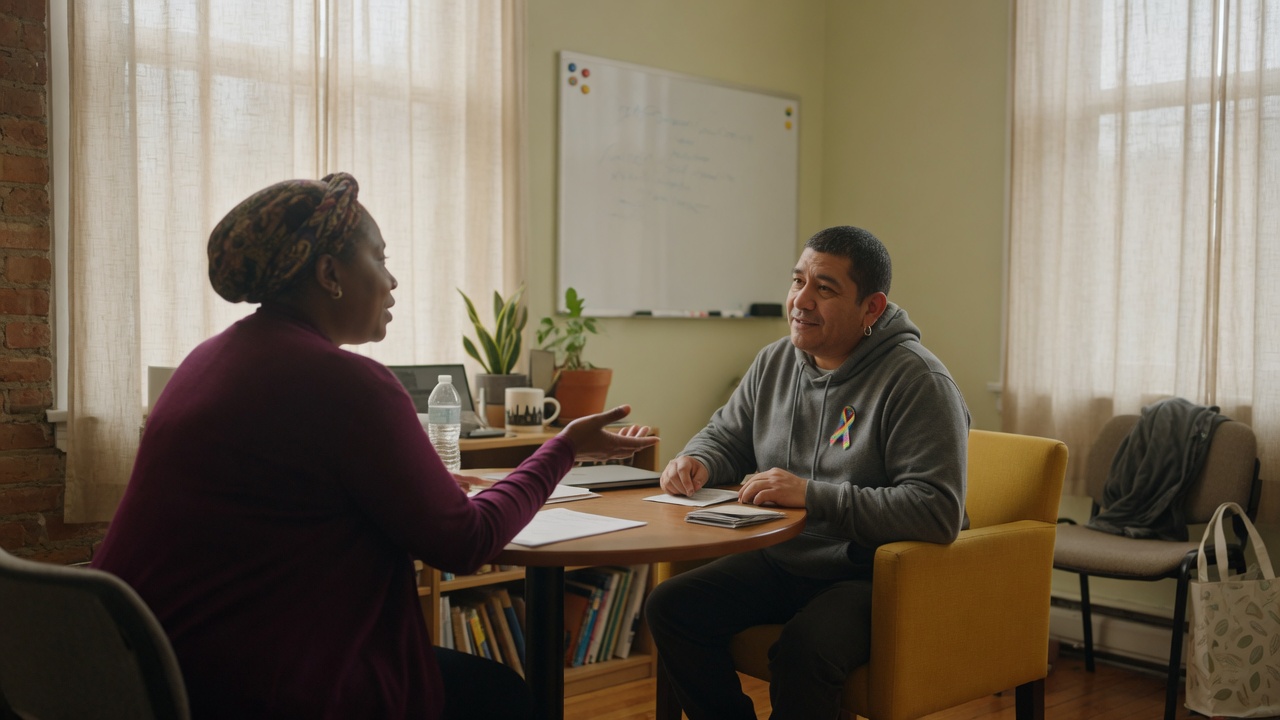
What Happens in an HIV/AIDS Education Session
An HIV/AIDS education session at LSA Recovery is a safe, private space where you can ask questions and learn at your own pace. Our care team leads these sessions with warmth and respect, never with judgment. You will learn about how HIV is transmitted, how to prevent it (including PrEP and PEP), and what treatment options are available today. We also talk about how to live well with HIV and how to protect your loved ones. These sessions are part of our Health Education Groups, which cover many topics related to overall wellness. If you also have concerns about substance use, our Substance Use Assessment can help connect the dots between your health and your recovery.
Education is just one piece of a larger support system. For example, if you or someone you care about uses opioids or other drugs, our Naloxone Training and Kits program teaches you how to reverse an overdose and stay safe. For those dealing with both substance use and mental health challenges, our MICA Program offers integrated care. And if you are worried about how to pay for services or how to navigate insurance, our Care Management team is here to help you every step of the way. They can check your coverage and explain what your plan includes, so you can focus on your health without financial stress.
We understand that reaching out for HIV education can feel hard, especially if you worry about cost or stigma. That is why we offer Same-Day Appointment options, so you can start when you are ready. And if you have family members who want to support you, our ACRA & CRAFT programs provide tools for families to help in a positive, non-judgmental way. Remember, learning about HIV is an act of strength. It helps you take control of your health and protect the people you love. You are not alone in this, and our team is here to walk with you.
Does Insurance Cover HIV/AIDS Education? Yes, Here’s How
If you are worried about the cost of HIV/AIDS education, you are not alone. Many people in Brooklyn wonder whether their health insurance will cover these services, or if they will have to pay out of pocket. The good news is that HIV/AIDS education is considered a preventive health service. Under the Affordable Care Act (ACA), most insurance plans cover preventive services like this without a copay or deductible, as long as you see an in-network provider. This means you can often get the information and support you need at little to no cost to you.
At LSA Recovery, our HIV/AIDS Education program is designed to be accessible and welcoming. Our care team can help you understand your coverage and verify your benefits before you start. We accept most major insurance plans, including Medicaid and Medicare. If you are unsure about your plan, our Care Management team is here to walk you through the process step by step. You can also start with a Same-Day Appointment if you prefer to get answers quickly. The goal is to remove any financial worry so you can focus on your health and well-being.
- HIV/AIDS education is typically covered as a preventive service under the Affordable Care Act, often with no copay or deductible for in-network care.
- LSA Recovery’s care team can help verify your insurance coverage and answer any questions about costs.
- We accept most major plans, including Medicaid and Medicare, and offer same-day appointments for those who want to start right away.
- Your insurance information is kept private and confidential, just like all of your health information.
What If I Don’t Have Insurance or Am Worried About Cost?
It is completely understandable to feel anxious about the cost of care, especially when you are already dealing with a lot. You might worry that HIV/AIDS education or other health services will be too expensive, or that your insurance will not cover them. The good news is that many preventive services, including HIV/AIDS education, are often covered by insurance plans without a copay or deductible, thanks to the Affordable Care Act. At LSA Recovery, our care team can help you understand what your plan covers, and we accept most major plans, including Medicaid and Medicare. If you do not have insurance, we can still help you find a way to access the education and support you need.
HIV/AIDS education is a powerful tool for staying healthy and protecting the people you care about. It covers topics like how HIV is transmitted, how to prevent it (including PrEP and PEP), treatment options, and how to live well with HIV. These sessions are private, non-judgmental, and tailored to your life. They are also part of a bigger picture of wellness. For example, if you are also working on substance use concerns, our Substance Use Assessment can help you understand how those pieces fit together. And if you need support for your overall health, our Health Education Groups offer a space to learn and connect with others. For those who want to be prepared in an emergency, our Naloxone Training and Kits program is another free or low-cost resource.
If you are worried about stigma or privacy, know that all of your information is kept confidential. Our staff is here to help you navigate insurance questions through our Care Management services, and we offer Same-Day Appointment options so you can start right away without a long wait. Whether you are coming on your own, with family, or through a program like ACS (Family Support) or Criminal Justice Counseling, we meet you where you are. You do not have to figure this out alone. Reaching out for education is a sign of strength, and we are here to help you take that step.
- Call LSA Recovery to ask about insurance coverage and free or low-cost options.
- Check with your insurance plan to see if HIV/AIDS education is a covered preventive service.
- Ask our team about Same-Day Appointment to get started quickly.
- Explore related support like ACRA & CRAFT for family support or the MICA Program if you have co-occurring mental health concerns.
How HIV/AIDS Education Connects to Other Care You May Need
HIV/AIDS education is not a standalone service. It works best when it is part of a larger plan that supports your whole health. At LSA Recovery, we see how learning about HIV can connect naturally to other kinds of care you might already be receiving or thinking about. For example, if you are also working on your substance use, our Substance Use Assessment can help us understand how HIV prevention or treatment fits into your daily life. Many people find that talking about HIV in a safe space makes it easier to also explore Medication-Assisted Treatment or join our Health Education Groups, where you can learn alongside others who share similar experiences.
This connection goes beyond medical facts. HIV/AIDS education can also support your emotional well-being. If you feel anxious, isolated, or overwhelmed, our Individual, Family & Group Counseling offers a place to talk through those feelings without judgment. For families, our ACRA & CRAFT program provides tools to support a loved one while also caring for yourself. And if you are managing both substance use and a mental health condition, our MICA Program brings together care for both at once. We also offer Naloxone Training and Kits as part of our harm reduction approach, because staying safe from overdose is another way to protect your health while you learn about HIV.
The goal is to make sure you never have to choose between one kind of care and another. Our Care Management team can help you understand how your insurance covers these services and connect you to anything else you need, like Crisis Management if you are in a tough moment, or Vocational & Educational Rehabilitation if you are ready to rebuild your work or school life. For those involved with the court system, our Criminal Justice Counseling and DWI Program can include HIV education as part of your plan. And for families working with child welfare, our ACS (Family Support) program makes sure HIV education is offered in a way that respects your whole situation. You can start with a Same-Day Appointment and let us help you build a path forward that fits you.
Support for Families and Caregivers
If you are a family member or caregiver of someone living with HIV or at risk for HIV, you may have questions about how to support your loved one while also taking care of yourself. HIV/AIDS education is not just for the person directly affected; it can also help families understand transmission, prevention, and treatment options. Many insurance plans cover these educational services for family members as well, especially when they are part of a broader care plan. At LSA Recovery, our care team offers family-centered support through programs like ACRA & CRAFT, which are designed to help families build communication skills and create a supportive environment for recovery. We also provide Individual, Family & Group Counseling to address the emotional and practical challenges that come with a new diagnosis or ongoing care.
You might worry about the cost of these services, but most insurance plans, including Medicaid and Medicare, cover HIV/AIDS education as a preventive benefit. Our Care Management team can help you verify your coverage and find options that fit your budget. For families involved with child welfare, our ACS (Family Support) program offers additional guidance and resources. We also offer Naloxone Training and Kits for families who want to be prepared in case of an overdose emergency, which can be a concern when substance use is part of the picture. No matter your situation, you are not alone. Reaching out for education and support is a sign of strength, and our staff is here to walk with you every step of the way.
- Learn about HIV transmission and prevention in a private, judgment-free setting.
- Get support for your own emotional well-being as a caregiver.
- Connect with other families through our Health Education Groups and ACRA & CRAFT programs.
- Ask our team about insurance coverage for family-focused services.
Taking the First Step: How to Get Started Today
If you are wondering whether your insurance covers HIV/AIDS education in Brooklyn, the clearest first step is to reach out to us at LSA Recovery. Our team can help you understand your plan, verify your benefits, and answer any questions you have about costs. We know that worrying about money or insurance can feel like a barrier, but we are here to make it easier. Many people find that their plan covers these services fully or at a low cost, especially since they are considered preventive care. You do not have to figure this out alone.
When you contact us, we can also connect you with other support that may be helpful. For example, if you are also managing a substance use concern, we offer a confidential Substance Use Assessment to understand your needs. Our Care Management team can help you coordinate appointments, find resources, and keep everything organized. And if you are ready to start right away, ask about our Same-Day Appointment option. We want to make the process as smooth and welcoming as possible.
- Call us or visit our Contact Us page to speak with someone who can check your insurance and answer your questions.
- Request a free, confidential consultation to learn more about what HIV/AIDS education involves and how it can help you.
- If you are connected to other programs like ACS (Family Support) or Criminal Justice Counseling, we can work with those too. Just let us know.
More Ways We Can Help
When to Seek Care Right Away
- Signs of an overdose: the person cannot be woken, breathing is slow or has stopped, or the lips and fingertips look blue or grey. Call 911 immediately and give naloxone if it is available.
- Thoughts of suicide or self-harm, or feeling unable to stay safe. Call or text 988 for the Suicide and Crisis Lifeline.
- Chest pain, a racing or irregular heartbeat, trouble breathing, or fainting.
- Withdrawal from alcohol or benzodiazepines with shaking, confusion, hallucinations, or a seizure. This can be life threatening and needs emergency care rather than stopping on your own.
- Repeated vomiting, being unable to keep fluids down, or a high fever during withdrawal.
Sources
If you or someone you know is struggling with substance use, thinking about suicide, or in crisis right now, help is available. Call or text 988 to reach the 988 Suicide & Crisis Lifeline, or call the SAMHSA National Helpline at 1-800-662-4357 (1-800-662-HELP) for free, confidential, 24/7 treatment referral and information in English and Spanish. You can also search for local treatment options anytime at FindTreatment.gov. You are not alone, and reaching out is a sign of strength.
Disclaimer: This article is for general educational purposes only and is not a substitute for professional mental-health, medical, or crisis care. Always seek the advice of a qualified clinician or care provider with any questions you may have about a specific mental-health, behavioral, or substance-use concern. If you are in crisis, see the resources below.
Does Insurance Cover Health Education Groups in Brooklyn? A Guide to Affordable Recovery Support
By the LSA Recovery editorial team
What Are Health Education Groups and How Do They Support Recovery?
Health education groups are a warm, welcoming space where you can learn about substance use, your health, and practical skills that support long-term recovery. These groups are not about judgment or pressure, they are about giving you the knowledge and tools to make informed choices. At LSA Recovery, our health education groups are one part of a bigger picture that starts with a Substance Use Assessment to understand your unique needs. From there, our care team works with you to build a plan that may include these groups alongside other services like Care Management and Individual, Family & Group Counseling.
In these groups, you might explore how substances affect your body and mind, ways to reduce risks, and how to build healthy habits. We also offer specialized sessions such as Substance Abuse Education, HIV/AIDS Education, and Naloxone Training and Kits, all designed to empower you. The group setting lets you connect with others who understand what you’re going through, which can make a big difference. This kind of support is rooted in our philosophy that recovery is possible for everyone, and that reaching out for help is a sign of strength.

Who Can Benefit From Health Education Groups?
Health education groups are for anyone who wants to learn more about substance use, recovery, and healthy living. Whether you are actively using substances, in recovery, a family member, or mandated by a court or agency, these groups offer a safe, non-judgmental space to gain knowledge and support. They cover topics like substance abuse education, HIV/AIDS education, and naloxone training, all aimed at empowering you to make informed choices. Research from NIDA shows that education is a critical component of effective treatment, helping people understand addiction and develop coping skills.
Many people benefit from these groups as part of a broader treatment plan. If you've recently completed a Substance Use Assessment, your care team may recommend joining a health education group. Our Care Management team can also help you find the right group and navigate any insurance questions, ensuring that financial concerns don't become a barrier.
The good news is that most health insurance plans, including Medicaid and Medicare, cover health education groups as part of behavioral health benefits. If you are uninsured or underinsured, LSA Recovery offers sliding-scale fees and grant-funded slots so that no one is turned away. Recovery is possible, and these groups are a vital step on that journey.
What Happens in a Health Education Group Session?
A health education group session at LSA Recovery is a warm, supportive space where you can learn practical skills and knowledge to support your recovery. Meeting in a small group setting with others who understand what you're going through, you'll explore topics like understanding how substances affect your body and mind, recognizing early warning signs of relapse, and building healthier coping habits. Our care team guides each session with compassion, not judgment, and you're never required to share more than you're comfortable with. These groups are part of a larger recovery plan that may also include individual counseling, medication-assisted treatment, or a substance use assessment to tailor the right approach for you.
Because we believe financial concerns should never stand between you and the support you deserve, we're here to help you navigate insurance coverage. Most major health plans, including Medicaid, Medicare, and private insurance, cover health education groups as part of outpatient behavioral health benefits. To find out exactly what your plan covers, call the number on your insurance card and ask about "outpatient substance use disorder education groups" or billing codes like HCPCS G0442 and G0443. You can also check if LSA Recovery is in-network. If you're uninsured or your plan doesn't cover these groups, we offer sliding-scale fees and grant-funded options, no one is turned away. Our care management team can walk you through every step, from verifying your benefits to connecting you with additional resources like vocational rehabilitation or crisis management if needed. For more on what to expect, explore our health education groups page or learn about our philosophy of compassionate care.
- Sessions cover substance abuse education, HIV/AIDS education, and naloxone training and kits (harm reduction).
- You'll gain skills to manage triggers, improve communication, and strengthen your support network.
- Our team provides non-judgmental guidance whether you're attending voluntarily or through a court, ACS, or DWI program.
- Financial barriers are addressed through insurance assistance, sliding-scale fees, and same-day appointments if you need urgent support.
Does Insurance Cover Health Education Groups in Brooklyn?
If you’re thinking about joining a health education group, you might wonder whether your insurance will help cover the cost. The short answer is: most major health plans, including Medicaid, Medicare, and private insurance, do cover these services. Health education groups, like the ones we offer at LSA Recovery, are often classified under “patient education” or “health coaching” in your plan’s behavioral health benefits. That means they’re typically reimbursable, just like a doctor’s visit or a counseling session. Our groups cover a range of topics, from substance abuse education to HIV/AIDS education and naloxone training and kits, all designed to give you practical skills and support in a warm, judgment-free setting.
The best way to know for sure is to check with your insurance company. Call the number on the back of your card and ask about coverage for “outpatient substance use disorder education groups” or mention billing codes like HCPCS G0442 or G0443. You can also ask if LSA Recovery is in-network. If that sounds overwhelming, don’t worry, our care management team is here to help you navigate the process. We can work with you to verify your benefits, and if needed, connect you with other resources like a substance use assessment or vocational & educational rehabilitation to support your overall wellness.
What if your insurance doesn’t cover the groups, or you don’t have insurance? Please don’t let that stop you from reaching out. LSA Recovery believes that financial concerns should never be a barrier to getting the support you deserve. We offer sliding-scale fees based on your income, and some grant-funded slots may be available. No one is turned away because of an inability to pay. Our team can also help you explore other programs, such as our MICA program for dual-diagnosis support, crisis management services, or ACRA & CRAFT for family support, that might complement your recovery journey. Seeking help is a sign of strength, and we’re here to make sure cost doesn’t stand in your way.
How to Check Your Insurance Coverage for Health Education Groups
Health education groups at LSA Recovery are a supportive space to learn practical skills for long-term wellness. Topics include substance abuse education, HIV/AIDS education, and naloxone training, all designed to help you make informed choices for your health. The good news is that most major health plans, including Medicaid, Medicare, and private insurance, cover these groups as part of outpatient behavioral health benefits. They are often classified under 'patient education' or 'health coaching,' which means they are typically reimbursable. If you are worried about cost, remember that reaching out for help is a sign of strength, and our team is here to help you navigate the process.
Here are simple steps to check your coverage. First, call the number on the back of your insurance card. Ask about coverage for 'outpatient substance use disorder education groups' or 'health education group billing codes.' You can also ask if LSA Recovery is in-network. If you are not sure, our Care Management team can help you verify your benefits and explain your options. They can also guide you through a Substance Use Assessment to see which groups fit your needs. And if you are ready to start soon, we offer Same-Day Appointment availability so you can begin without delay.
What if your insurance does not cover these groups, or you do not have insurance? LSA Recovery believes that financial concerns should never be a barrier to care. We offer sliding-scale fees and grant-funded slots for those who qualify. Our team can also connect you with other programs that may complement your recovery, such as Vocational & Educational Rehabilitation or ACRA & CRAFT. No one is turned away due to inability to pay. That is part of Our Philosophy. To learn more, Contact Us directly, we are here to listen and help you find a path forward.
- Call your insurance company using the number on your card.
- Ask about coverage for outpatient substance use disorder education groups.
- Confirm if LSA Recovery is in-network.
- Reach out to our Care Management team for help with verification.
- If needed, ask about sliding-scale fees or grant-funded slots.
What If I Don’t Have Insurance or My Plan Doesn’t Cover These Groups?
If you’re worried about how to pay for health education groups, you’re not alone. The good news is that most major health plans, including Medicaid, Medicare, and private insurance, consider these groups a valuable part of behavioral health care. At LSA Recovery, our care team is here to help you understand your coverage and find a path forward, no matter your situation.
If you have insurance, the first step is to check your plan. Call the number on the back of your insurance card and ask about coverage for “outpatient substance use disorder education groups” or “health education group billing codes.” You can also ask if LSA Recovery is in-network. Our care management team can help you with this process, too, we’re used to navigating insurance questions and can guide you through it. For example, if you’re also interested in other services like a substance use assessment or medication-assisted treatment, we can help you understand how those fit into your plan as well.
But what if you don’t have insurance, or your plan doesn’t cover these groups? Don’t let that stop you from reaching out. LSA Recovery offers sliding-scale fees based on your income, and we have grant-funded slots available for people who qualify. No one is turned away because they can’t pay. We also have other programs that can support you, such as individual, family & group counseling, vocational & educational rehabilitation, and care management. These services can complement health education groups and help you build a full recovery plan. If you’re facing a crisis, our crisis management team is here for you, too.
Remember, seeking help is a sign of strength, not weakness. Financial concerns should never be a barrier to getting the support you deserve. Recovery is possible, and our team at LSA Recovery is committed to walking with you every step of the way. You can reach us through our contact us page or schedule a same-day appointment to get started today.
How to Get Started With Health Education Groups at LSA Recovery
Getting started with health education groups at LSA Recovery is straightforward. Most major health plans, including Medicaid, Medicare, and private insurance, cover health education groups as part of behavioral health benefits. Our care management team can help you verify your insurance coverage and explain what services are included, so you don't have to navigate this alone. Whether you're interested in substance abuse education, HIV/AIDS education, or naloxone training, we want to make sure cost is never a barrier.
If you're unsure about your coverage, call the number on your insurance card and ask about outpatient substance use disorder education groups. You can also reach out to LSA Recovery directly to schedule a substance use assessment, which helps us understand your needs and connect you with the right groups. We offer same-day appointments for those ready to begin right away. For anyone without insurance or with limited coverage, we provide sliding-scale fees and grant-funded slots, no one is turned away due to inability to pay. Our philosophy is rooted in compassion and respect, and we are committed to helping you find a path forward.
- Call your insurance provider and ask about coverage for health education groups (mention codes like G0442 or G0443 if helpful).
- Contact LSA Recovery to speak with our care management team about verifying your benefits and finding the right group.
- Schedule a substance use assessment to get a personalized recommendation for which health education groups fit your recovery goals.
- Attend your first group session, our team will welcome you in a warm, non-judgmental space where learning and growth come first.
Frequently Asked Questions About Insurance and Health Education Groups
Many people wonder whether their insurance will cover health education groups. The good news is that most major health plans, including Medicaid, Medicare, and private insurance, consider these groups a valuable part of behavioral health care. Health education groups, like those offered through our Substance Abuse Education and HIV/AIDS Education programs, are often classified under "patient education" or "health coaching." This means they are typically reimbursable. At LSA Recovery, our Care Management team can help you understand your specific plan and guide you through the process of verifying coverage.
If you have insurance, the first step is to call the number on the back of your card. Ask about coverage for "outpatient substance use disorder education groups" or mention billing codes like HCPCS G0442 or G0443. You can also ask if LSA Recovery is in-network. Our team is here to help with this, too, just reach out to us through our Contact Us page, and we can assist with the verification process.
What if your insurance doesn't cover the groups, or you don't have insurance? Please don't let that stop you from seeking support. LSA Recovery offers sliding-scale fees and grant-funded slots so that no one is turned away due to inability to pay. We also have other programs that may offer complementary support, such as our Substance Use Assessment, Medication-Assisted Treatment, or Individual, Family & Group Counseling. Our philosophy is that financial concerns should never be a barrier to getting the care you deserve. Recovery is possible, and we are here to help you find a path that works for you.
- Health education groups are a supportive, non-judgmental space to learn skills that promote long-term wellness.
- Most major health plans cover these groups as part of behavioral health benefits.
- Our Care Management team can help you verify your insurance coverage.
- If you are uninsured or underinsured, sliding-scale fees and grant-funded options are available.
- Seeking help is a sign of strength, and financial worries should never stop you from reaching out.
More Ways We Can Help
- Health Education Groups
- MICA Program
- About Us
- Crisis Management
- Criminal Justice Counseling
- DWI Program
- ACS (Family Support)
When to Seek Care Right Away
- Signs of an overdose: the person cannot be woken, breathing is slow or has stopped, or the lips and fingertips look blue or grey. Call 911 immediately and give naloxone if it is available.
- Thoughts of suicide or self-harm, or feeling unable to stay safe. Call or text 988 for the Suicide and Crisis Lifeline.
- Chest pain, a racing or irregular heartbeat, trouble breathing, or fainting.
- Withdrawal from alcohol or benzodiazepines with shaking, confusion, hallucinations, or a seizure. This can be life threatening and needs emergency care rather than stopping on your own.
- Repeated vomiting, being unable to keep fluids down, or a high fever during withdrawal.
Sources
If you or someone you know is struggling with substance use, thinking about suicide, or in crisis right now, help is available. Call or text 988 to reach the 988 Suicide & Crisis Lifeline, or call the SAMHSA National Helpline at 1-800-662-4357 (1-800-662-HELP) for free, confidential, 24/7 treatment referral and information in English and Spanish. You can also search for local treatment options anytime at FindTreatment.gov. You are not alone, and reaching out is a sign of strength.
Disclaimer: This article is for general educational purposes only and is not a substitute for professional mental-health, medical, or crisis care. Always seek the advice of a qualified clinician or care provider with any questions you may have about a specific mental-health, behavioral, or substance-use concern. If you are in crisis, see the resources below.
Does Insurance Cover a DWI Program in Brooklyn? What You Need to Know
By the LSA Recovery editorial team
What Is a DWI Program and Why Might You Need One?
A DWI program is a structured educational and counseling program for people charged with driving while intoxicated (DWI) or driving under the influence (DUI). These programs are often required by a court, the DMV, or a probation officer after an alcohol- or drug-related driving offense. The goal is to help you understand your relationship with alcohol or other substances, reduce the risk of future incidents, and support your overall well-being. At LSA Recovery, our DWI Program includes a comprehensive assessment, group education sessions, and individual counseling, all in a non-judgmental environment where you are treated with respect. Our approach is guided by our Philosophy of treating everyone with dignity, and you can read more About Us on our website.
You might need a DWI program if you were arrested for impaired driving, if your license was suspended, or if a court or agency like ACS (Family Support) requires it. Even if you are not mandated, enrolling voluntarily can be a powerful step toward understanding your patterns and making healthier choices. The program begins with a Substance Use Assessment to evaluate your situation, so the care team can tailor the education and counseling to meet you where you are. You may then participate in Substance Abuse Education groups, Health Education Groups, and other services that address substance use and broader life factors like stress, relationships, or mental health.
Needing a DWI program does not mean you are a bad person or have failed. Alcohol use disorder is a medical condition, and effective treatment is available. According to the National Institute on Alcohol Abuse and Alcoholism (NIAAA), treatment for alcohol problems can help people reduce drinking, achieve abstinence, and improve quality of life. Our care team guides you from the initial assessment through completing the program and beyond. If you also have co-occurring mental health challenges, our MICA Program offers integrated support. And if you need help with work or school, our Vocational & Educational Rehabilitation services can help you rebuild stability and confidence.

Understanding Alcohol Use Disorder and When to Seek Help
Alcohol use disorder (AUD) is a medical condition that affects the brain and body, making it hard to control drinking even when it causes problems at work, home, or with the law. The National Institute on Alcohol Abuse and Alcoholism (NIAAA) confirms that AUD is treatable. If you have been charged with a DWI, you may wonder what comes next. The first step is often a Substance Use Assessment, which helps our care team understand your situation and recommend the right support. This conversation is not a judgment, it opens the door to services like our DWI Program, which combines education, counseling, and care management to help you move forward.
Many people feel scared or ashamed after a DWI, but help is available. Our DWI Program meets legal requirements while addressing the underlying factors that led to the charge. This includes Individual, Family & Group Counseling to build healthier coping skills, and Substance Abuse Education groups to learn how alcohol affects your body and relationships. For those with mental health concerns, our MICA Program provides integrated support for both substance use and emotional well-being. For some, Medication-Assisted Treatment may also be an option to support recovery. The goal is to help you regain control and avoid future problems.
If you are unsure whether your insurance will cover a DWI program in Brooklyn, you are not alone. Many health plans, including Medicaid and private insurance, cover these services as part of substance use treatment, but coverage varies. Our care team can help verify your benefits and explore sliding scale fees if you lack insurance. You can contact us for a Same-Day Appointment. Reaching out is a sign of strength, and recovery is possible with the right support.
- Alcohol use disorder is a treatable medical condition, not a moral failing.
- A Substance Use Assessment is the first step to understanding your needs and connecting with the right program.
- Our DWI Program includes education, counseling, and care management to meet legal requirements and build a healthier future.
- Insurance often covers DWI programs, and our team can help you verify your benefits or find affordable options.
What to Expect in a DWI Program: Assessment, Education, and Support
If you're required to attend a DWI program, you might feel unsure about what happens next. The good news is that these programs are designed to help you move forward, not to judge. At LSA Recovery, our DWI Program starts with a thorough Substance Use Assessment, a private, one-on-one conversation where our care team learns about your history with alcohol or other substances and any challenges you're facing. The goal is to create a plan that works for you, not a one-size-fits-all approach. Many health insurance plans cover this assessment as part of substance use treatment. If cost is a concern, our team can help verify benefits and explore sliding scale fees if you don't have insurance.
After the assessment, you'll participate in education and counseling sessions. Our Substance Abuse Education groups provide practical information about how alcohol and other substances affect your body and mind. You'll also join Health Education Groups covering stress management, healthy coping skills, and building routines that support recovery. These are supportive spaces where you learn at your own pace. Individual, Family & Group Counseling helps you explore the reasons behind your substance use, repair relationships, and build new habits. If you are also dealing with mental health challenges like anxiety or depression, our MICA Program offers integrated support. And if family members want to be involved, ACRA & CRAFT can help them support you positively.
Beyond the core program, you'll have access to additional support services. Our Care Management team can connect you with housing, food assistance, or medical care. If you need help with work or school, our Vocational & Educational Rehabilitation program assists with job training, resume building, or returning to education. For those involved with the legal system, our Criminal Justice Counseling provides tailored guidance. And if you ever feel overwhelmed, our Crisis Management team is here to help, no judgment. We also offer Naloxone Training and Kits as part of harm reduction, and HIV/AIDS Education to support overall health. Throughout the program, our staff walks alongside you, helping you meet court or agency requirements while focusing on long-term well-being. As the National Institute on Alcohol Abuse and Alcoholism (NIAAA) notes, treatment for alcohol problems works, and reaching out is a sign of strength.
- A private Substance Use Assessment to understand your needs
- Education groups that teach about alcohol, health, and coping skills
- Counseling sessions for you and your family, if you choose
- Care Management to connect you with housing, jobs, and other resources
- Support for co-occurring mental health conditions through our MICA Program
- Help with legal or vocational needs, including Criminal Justice Counseling and Vocational Rehabilitation
How to Get Started: Same-Day Appointments and Contacting Us
Taking the first step toward a DWI program can feel overwhelming, especially when you are worried about cost. You do not have to figure it out alone. At LSA Recovery, our care team helps you understand your options, including insurance coverage, and makes getting started simple and stress-free. We offer Same-Day Appointment so you do not have to wait. Whether you come on your own, through a court order, or because a loved one encouraged you, we welcome you with respect and without judgment. You can call us or visit our Contact Us page to speak with someone who will guide you through the next steps.
When you reach out, we will help you schedule a Substance Use Assessment, a private, one-on-one conversation where we learn about your situation. During that visit, we can also begin verifying your insurance benefits. Many health plans, including Medicaid, Medicare, and private insurance, cover DWI programs as part of substance use treatment. Coverage varies, but our team is experienced in working with insurance companies and can explain what your plan includes. If you do not have insurance, we offer sliding scale fees and can connect you with Care Management to explore other funding options. No one is turned away because of a lack of insurance or ability to pay.
A DWI program is about more than attending classes, it is a chance to build a healthier future. Our program includes education, counseling, and support services like Individual, Family & Group Counseling, Health Education Groups, and Vocational & Educational Rehabilitation. The NIAAA explains that treatment for alcohol problems works, and finding the right support is key. We are here to be that support. To get started, simply call us or request a Same-Day Appointment online. We will take it from there, one step at a time.
Does Insurance Cover a DWI Program in Brooklyn?
If you or someone you care about has been charged with a DWI in Brooklyn, one of the first questions may be, "How will I pay for this?" It is understandable to worry about cost, especially when dealing with the stress of a legal situation. The good news is that many health insurance plans, including Medicaid and most private policies, do cover DWI programs as part of substance use treatment. Coverage varies by plan, but you do not have to figure this out alone. Our care team at LSA Recovery can help you understand your benefits and find a path forward, no matter your insurance status.
The first step is to verify your insurance benefits with your provider and with our program. Our Care Management services make a real difference here. Our staff works with you to contact your insurance company, explain what our DWI Program includes, and find out exactly what is covered. A DWI program typically involves a Substance Use Assessment, education, counseling, and support. These services are often covered under the same benefits as other medical care. If you have questions about your plan, reach out to us. We can also help you explore sliding scale fees or public funding if you lack insurance. Lack of insurance should never be a barrier to getting help.
Beyond the financial side, a DWI program is a chance to learn and grow. Our program includes Substance Abuse Education, Health Education Groups, and Individual, Family & Group Counseling to address your overall well-being. We also offer ACRA & CRAFT for families, and Vocational & Educational Rehabilitation to help you rebuild your life. If you feel overwhelmed, know you are not alone. You can schedule a Same-Day Appointment or simply Contact Us to ask questions. Seeking help is a sign of strength, and recovery is possible. As the National Institute on Alcohol Abuse and Alcoholism (NIAAA) explains, alcohol use disorder is a medical condition, and effective treatments are available. You deserve support, not judgment.
What If You Don’t Have Insurance? Options and Support
If you’re worried about paying for a DWI program, you’re not alone. Many people in Brooklyn and across New York City ask: does insurance cover a DWI program in Brooklyn? Most health insurance plans. Medicaid, Medicare, and many private plans, do cover DWI programs as part of substance use treatment. But coverage depends on your specific plan, deductible, and medical necessity. That’s why checking benefits with your insurance company and the program is important.
At LSA Recovery, our care team can help you verify insurance coverage for our DWI Program, which includes a full Substance Use Assessment, education, counseling, and support. If you don’t have insurance, we have options. We offer sliding scale fees based on income, and we can connect you with public funding or other assistance through Care Management. No one should have to skip treatment because of cost, reaching out is a sign of strength.
Our DWI Program is comprehensive and supportive, not punitive. It includes Individual, Family & Group Counseling, Substance Abuse Education, and Health Education Groups. We also offer the MICA Program for co-occurring mental health conditions, and ACRA & CRAFT for family support. If you are mandated by a court or agency like ACS (Family Support), our Criminal Justice Counseling program can help. The first step is to contact us for a Same-Day Appointment or to discuss coverage. You can reach us through our Contact Us page, and our team will guide you with respect and without judgment.
For more information on alcohol use disorder and treatment options, the National Institute on Alcohol Abuse and Alcoholism (NIAAA) provides helpful resources. Remember, recovery is possible, and you don’t have to face this alone.
Support for Family Members: How ACRA and CRAFT Can Help
When someone you love is struggling with substance use, it can feel like your whole world is turned upside down. You may feel worried, frustrated, or unsure what to do. At LSA Recovery, we understand that families are an important part of the healing journey. We offer two evidence-based approaches to support family members: the Adolescent Community Reinforcement Approach (ACRA) and Community Reinforcement and Family Training (CRAFT). These programs do not blame you or your loved one. Instead, they focus on building skills, improving communication, and creating a supportive environment that encourages positive change.
ACRA works with adolescents and their families to help young people build a life they enjoy without substances. It identifies what motivates the teen, spending time with friends, pursuing a hobby, or feeling independent, and uses those interests to encourage healthier choices. CRAFT teaches adult family members practical skills to reduce their own stress, improve their relationship with their loved one, and gently encourage them to seek help. Both approaches are non-confrontational and respect each person's readiness to change. For more on how these programs work, visit our ACRA & CRAFT page.
If you are a family member feeling lost, you are not alone. Our care team can help you explore ACRA and CRAFT, and we offer other support such as ACS (Family Support) for families involved with child welfare, and Individual, Family & Group Counseling to help everyone heal. You do not have to navigate this alone. Reaching out for support for yourself is a sign of strength, and it can make a real difference for your whole family.
Building a Strong Recovery: Beyond the DWI Program
Completing a DWI program is a meaningful step, but recovery doesn’t end there. At LSA Recovery, we see the program as a foundation to build the life you want. Our care team supports you long after required sessions end. Through Care Management, we help coordinate ongoing care, connect with community resources, and address any challenges. For those rebuilding a career or education, our Vocational & Educational Rehabilitation program offers practical help to move forward with confidence.
Recovery involves healing relationships and finding new ways to cope. Our ACRA & CRAFT programs involve family members to strengthen your progress. Individual, Family & Group Counseling provides a safe space to work through deeper issues, while Health Education Groups and Substance Abuse Education give tools to understand patterns and make healthier choices. These services are part of a comprehensive approach that goes beyond any single program.
Recovery is a process, not a destination. The National Institute on Alcohol Abuse and Alcoholism (NIAAA) reminds us that treatment for alcohol problems works and that many people recover fully. Whether you’re starting your DWI program or have finished, our team is ready to walk with you. Reach out anytime, we’re here to help you build a strong, lasting recovery on your own terms.
More Ways We Can Help
When to Seek Care Right Away
- Signs of an overdose: the person cannot be woken, breathing is slow or has stopped, or the lips and fingertips look blue or grey. Call 911 immediately and give naloxone if it is available.
- Thoughts of suicide or self-harm, or feeling unable to stay safe. Call or text 988 for the Suicide and Crisis Lifeline.
- Chest pain, a racing or irregular heartbeat, trouble breathing, or fainting.
- Withdrawal from alcohol or benzodiazepines with shaking, confusion, hallucinations, or a seizure. This can be life threatening and needs emergency care rather than stopping on your own.
- Repeated vomiting, being unable to keep fluids down, or a high fever during withdrawal.
Sources
If you or someone you know is struggling with substance use, thinking about suicide, or in crisis right now, help is available. Call or text 988 to reach the 988 Suicide & Crisis Lifeline, or call the SAMHSA National Helpline at 1-800-662-4357 (1-800-662-HELP) for free, confidential, 24/7 treatment referral and information in English and Spanish. You can also search for local treatment options anytime at FindTreatment.gov. You are not alone, and reaching out is a sign of strength.
Disclaimer: This article is for general educational purposes only and is not a substitute for professional mental-health, medical, or crisis care. Always seek the advice of a qualified clinician or care provider with any questions you may have about a specific mental-health, behavioral, or substance-use concern. If you are in crisis, see the resources below.