What to Expect on Your First Career Counselor Meeting With a Vocational Rehabilitation Specialist in New York

Only 1 in 3 people in recovery from substance use disorders are employed full-time within two years of completing treatment, not because they lack ability, but because they lack the right guidance. If you’re in Brooklyn and taking your first steps toward rebuilding your life, meeting with a vocational rehabilitation specialist in New York could be one of the most powerful moves you make. That first appointment can feel intimidating, but knowing what to expect transforms it from a source of anxiety into a genuine turning point.
At LSA Recovery Inc., we believe that recovery is about more than sobriety, it’s about reclaiming your whole life, including your career. Our Education and Vocational Services are designed to meet you exactly where you are, with no judgment and no pressure.
Connect with vocational rehabilitation specialist in New York.
Key Takeaways 📋
- Your first meeting is an assessment and conversation, not a test or an interview.
- A vocational rehabilitation specialist in New York helps you explore realistic career options based on your skills, history, and goals.
- You’ll be asked about your background, challenges, and motivations, honesty is your greatest asset.
- A personalized action plan is typically developed together during or after the first session.
- At LSA Recovery, vocational support is integrated with addiction treatment and mental health care for a truly whole-person approach.
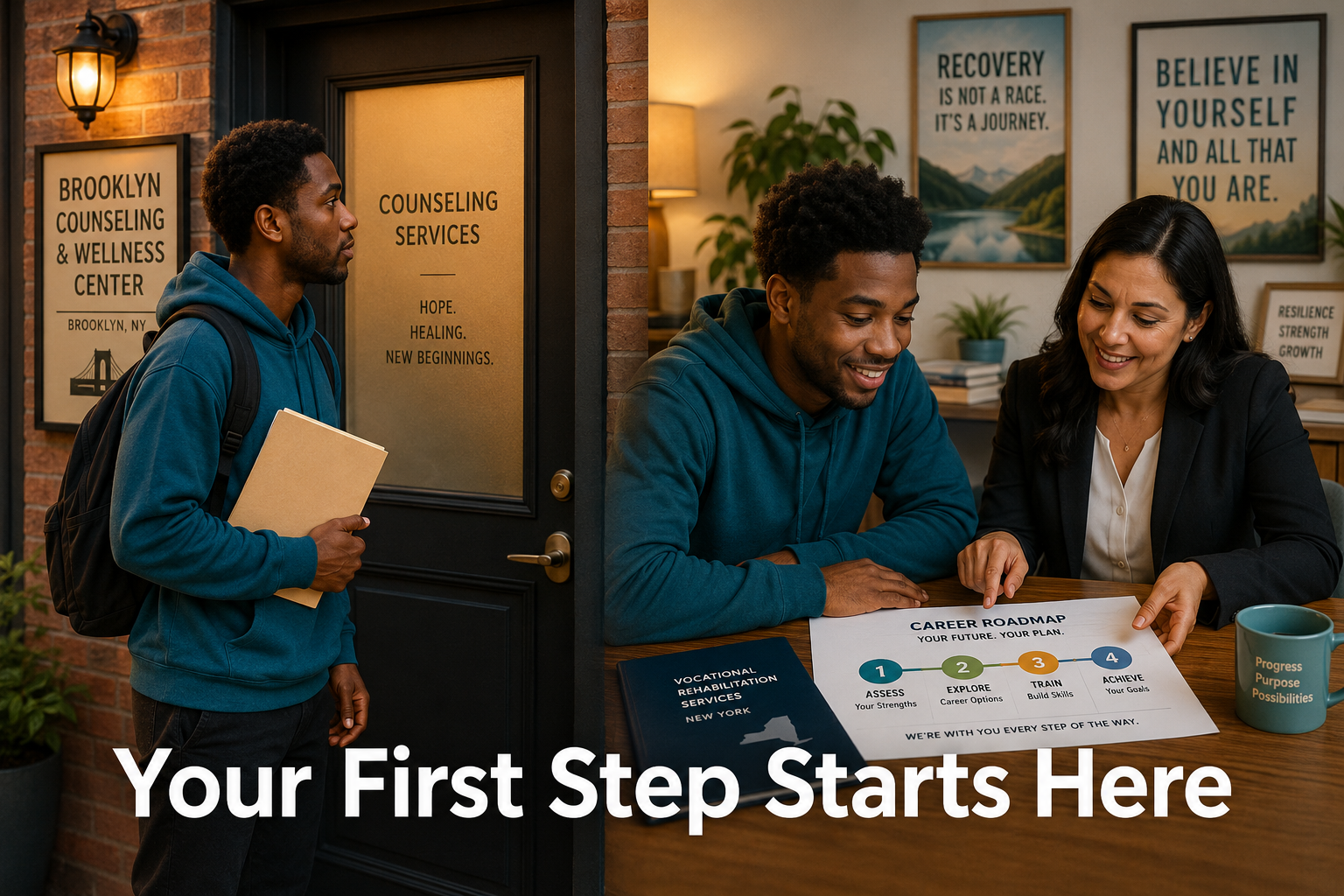
What Happens in Your First Career Counselor Meeting?
The Meeting Is a Two-Way Conversation
One of the biggest misconceptions people have is that a career counselor will hand them a list of jobs and send them on their way. That’s not how it works. Your first session is a structured conversation, a chance for both you and the counselor to understand each other.
A qualified vocational rehabilitation specialist in New York is trained to listen deeply. They’re not there to judge your past employment gaps, your criminal record, or the fact that addiction may have disrupted your work history. They’re there to help you build forward.
Expect the counselor to:
- Introduce themselves and explain how the process works
- Ask open-ended questions about your background, interests, and goals
- Create a safe space for honest, stigma-free dialogue
- Explain confidentiality so you know your information is protected
What You’ll Be Asked About
During your first meeting, a vocational rehabilitation counselor will typically explore several areas of your life. This helps them know not just what jobs might fit you, but what kind of support you need to get there.
Here’s a general breakdown of topics covered:
| Topic | Why It Matters |
|---|---|
| Work history & education | Identifies transferable skills and gaps |
| Personal strengths & interests | Points toward fulfilling career paths |
| Challenges and barriers | Helps plan realistic, achievable steps |
| Short-term and long-term goals | Guides the direction of counseling |
| Support systems | Assesses what’s already in place |
| Health and recovery status | Ensures the plan fits your current capacity |
You don’t need to have all the answers. In fact, not knowing is exactly why you’re there. Comprehending what a vocational rehabilitation counselor does can help ease the pressure before you walk in the door.
How to Prepare for Your First Session
Preparation makes a real difference. You don’t need a polished resume or a five-year plan. You just need to show up with a willingness to be honest and open. Here are some practical ways to get ready:
Before your appointment:
- ✅ Write down 2-3 things you’ve been good at in past jobs or life experiences
- ✅ Think about what kind of work environment makes you feel comfortable
- ✅ Note any barriers you’re facing, transportation, childcare, legal history, health
- ✅ Bring any documents you have: ID, resume, GED or diploma if available
- ✅ Reflect on what motivates you, not just money, but purpose
Being transparent about your substance use history, if relevant, is also encouraged. Many vocational rehabilitation specialists in New York work regularly with people in recovery and comprehend the unique challenges involved. Your honesty allows them to tailor their guidance to your real situation, not an idealized version of it.
Building Your Action Plan With a Vocational Rehabilitation Specialist in New York
What Comes Out of the First Meeting
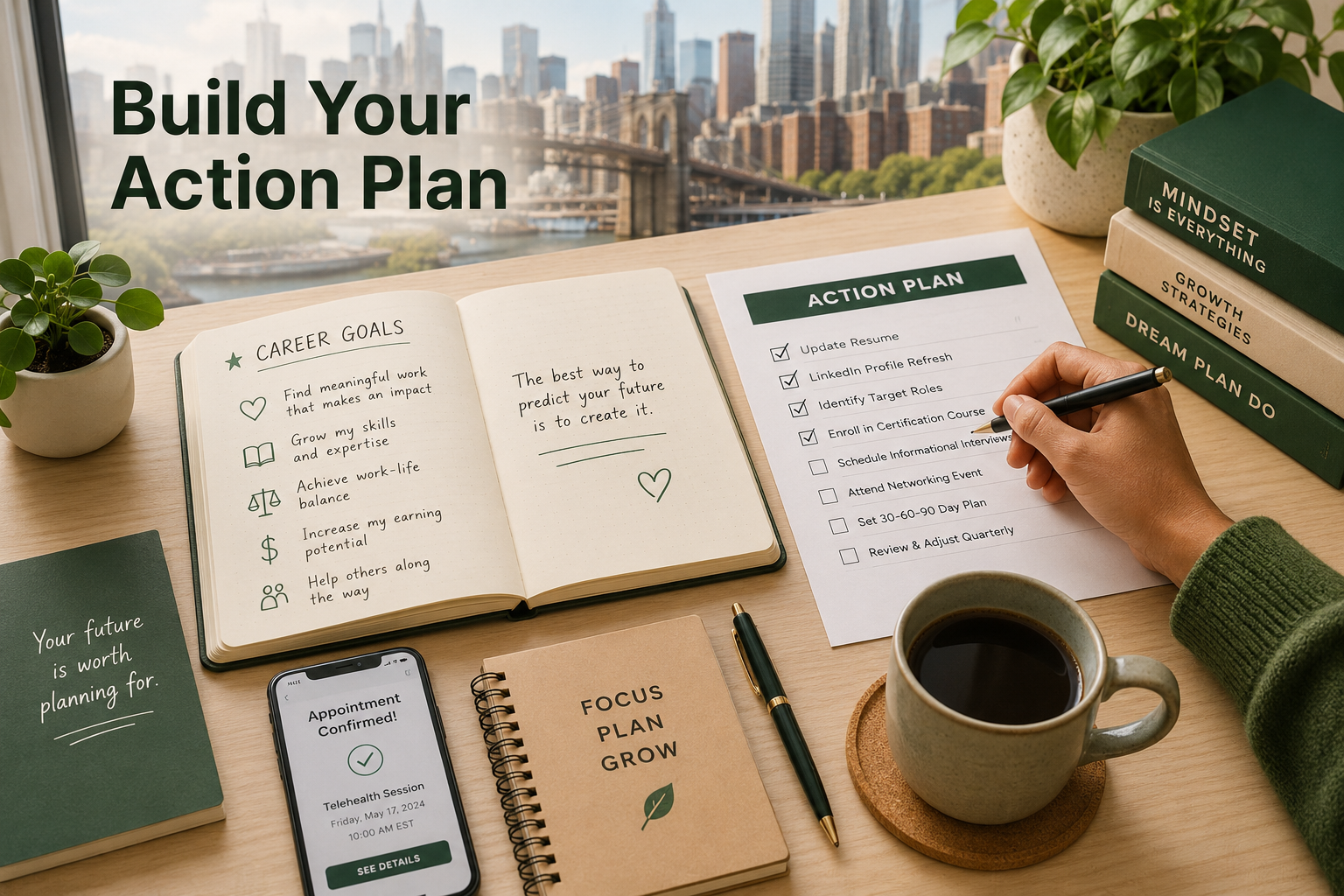
By the end of your first session, or shortly after, you and your counselor will typically have the foundation of a personalized action plan. This is a roadmap that outlines:
- Short-term steps (e.g., updating your resume, enrolling in a training program)
- Medium-term goals (e.g., completing a certification, applying for jobs in a specific field)
- Long-term vision (e.g., stable employment in a career that supports your recovery lifestyle)
The plan is not set in stone. Life changes, and your counselor will adjust it with you. What matters is that it’s yours, built around your strengths, your pace, and your goals.
If you’re curious about which fields offer the most opportunity, exploring the 5 most in-demand vocational careers for the future can give you a helpful starting point before or after your first meeting.
The Role of Active Participation
Here’s something many people don’t expect: your engagement is the most important factor in whether counseling works. A vocational rehabilitation specialist in New York can open doors, identify resources, and map out a path, but you have to walk it.
This means:
- Showing up to follow-up appointments
- Completing any tasks or applications discussed
- Being open to feedback, even when it challenges your assumptions
- Asking questions when you don’t comprehend something
Active participation isn’t about being perfect. It’s about being present and honest. Even if you miss a step or hit a setback, a good counselor will help you recalibrate, not shame you for stumbling.
How Vocational Services Fit Into Recovery at LSA Recovery
At LSA Recovery Inc., vocational support doesn’t exist in a vacuum. It’s part of a comprehensive, whole-person treatment model that addresses addiction, mental health, and life skills together.
Our Care Management services connect clients with employment resources while also supporting their broader medical and social needs. For clients dealing with both substance use and mental health conditions, our MICA Program provides specialized support that addresses both issues simultaneously, because stability in one area of life supports stability in all others.
For those who want to know how to choose the right vocational training for their career goals, our counselors can walk you through options that align with your recovery timeline and personal strengths.
We also recognize that some clients face additional barriers, including involvement with the criminal justice system or ACS. Our team is experienced in working with these situations with full respect and no judgment. Comprehending what qualifications are needed for vocational rehabilitation can also help you know what to expect from the process.
What Makes a Good Vocational Rehabilitation Specialist?
Not all career counselors are the same. When working with a vocational rehabilitation specialist in New York, look for someone who:
- 🎓 Holds a master’s degree in counseling or a related field
- 📋 Has experience with populations in recovery or with co-occurring conditions
- 🤝 Practices a collaborative, non-directive style, guiding rather than dictating
- 🌍 Understands the cultural and economic realities of your community
- 💬 Communicates clearly and makes you feel heard and respected
At LSA Recovery, our multicultural team serves Brooklyn’s diverse communities in English, Spanish, Russian, and Ukrainian.
After the First Meeting: What’s Next?
Your first session is just the beginning. Here’s what typically follows:
- Follow-up appointments to review progress and adjust the plan
- Referrals to training programs, job placement services, or educational resources
- Coordination with other services at LSA Recovery, including counseling and care management
- Ongoing support as you navigate job applications, interviews, and workplace challenges
The process of vocational rehab in New York varies by individual, but having consistent support dramatically improves outcomes. Recovery and employment reinforce each other, stable work supports sobriety, and sobriety supports stable work.
FAQs:
Do I need to be fully sober before meeting with a vocational rehabilitation specialist in New York?
No. You don’t need to be at any particular stage of recovery to start vocational counseling. In fact, beginning to think about career goals during treatment can be a powerful motivator. At LSA Recovery, our vocational counselors work alongside your treatment team to ensure the timing and pace of career planning fits your recovery journey.
What if I have a criminal record or gaps in my work history?
This is more common than you might think, and a good vocational rehabilitation specialist in New York is trained to work with exactly these situations. Your counselor will help you identify transferable skills, address potential employer concerns honestly, and connect you with employers and programs that are open to hiring people with varied histories.
Is vocational counseling covered by Medicaid or Medicare?
At LSA Recovery, Medicaid, Medicare, and most insurances are accepted for our treatment and support services. We also have insurance representatives on staff to assist those who are still in the process of obtaining coverage.
What if I don’t know what career I want?
That’s completely okay, and it’s one of the most common things counselors hear. Your first meeting is partly designed to help you discover what you want. Through conversation, assessments, and exploration of your interests and strengths, a vocational rehabilitation specialist in New York will help you begin to narrow down options that feel realistic and meaningful.
References
- U.S. Bureau of Labor Statistics. (2022). School and Career Counselors and Advisors: Occupational Outlook Handbook. U.S. Department of Labor. https://www.bls.gov/ooh/community-and-social-service/school-and-career-counselors.htm
- Substance Abuse and Mental Health Services Administration (SAMHSA). (2023). Key Substance Use and Mental Health Indicators in the United States: Results from the 2022 National Survey on Drug Use and Health. U.S. Department of Health and Human Services. https://www.samhsa.gov/data/report/2022-nsduh-annual-national-report
- National Institute on Drug Abuse (NIDA). (2022). Principles of Drug Addiction Treatment: A Research-Based Guide (Third Edition). National Institutes of Health. https://nida.nih.gov/publications/principles-drug-addiction-treatment-research-based-guide-third-edition